
WPC decking can become hot when exposed to direct sunlight, particularly in open outdoor areas during periods of strong solar exposure. For homeowners asking if WPC decking gets hot in Malaysia, the answer depends on several factors, including board colour, product formulation, duration of sun exposure, shade, airflow and the surrounding environment.
Composite decking heat is especially relevant for spaces where people regularly walk barefoot, such as poolside areas, balconies and residential patios. A WPC deck installed beneath permanent shade can provide a very different surface experience from the same or similar material exposed to direct afternoon sun.
Surface temperature should therefore be considered as part of the overall decking design. Material selection, colour, orientation, shade and ventilation can all influence outdoor comfort in Malaysia's warm tropical climate.
Why Outdoor Decking Gets Hot
Outdoor decking gets hot because its surface absorbs energy from solar radiation and converts part of that energy into heat. The amount of heat retained at the surface depends on the material and its exposure conditions.
Air temperature is only one factor.
A decking surface exposed to direct sunlight can become considerably warmer than the surrounding air because solar energy is striking the material continuously.
The same deck may feel cooler in the morning, hotter during peak sun exposure and cooler again once it is shaded.
This changing pattern means WPC deck temperature should be considered according to actual solar exposure rather than air temperature alone.
Solar Radiation and Surface Temperature
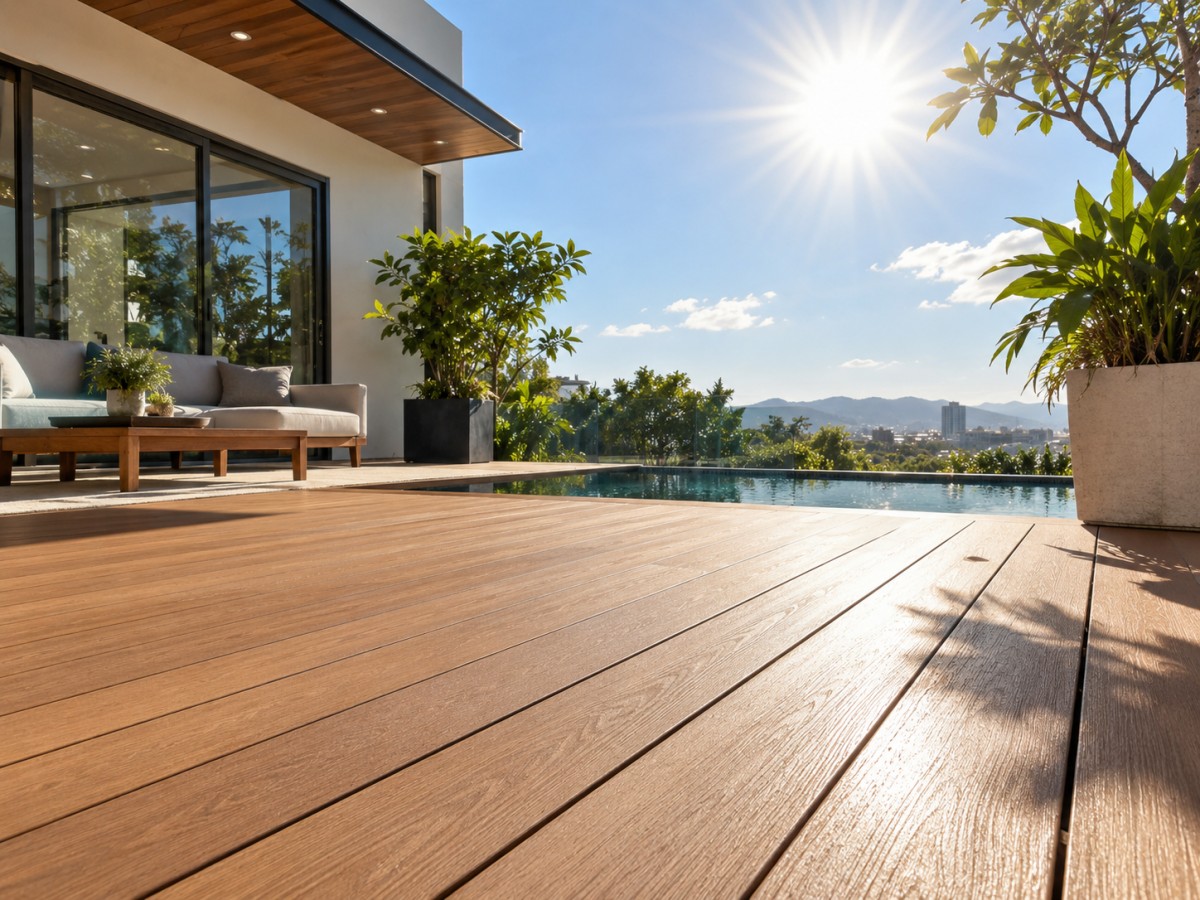
Solar radiation is the main source of heat affecting exposed outdoor decking during the day. Direct sunlight transfers energy to the decking surface.
Some of this energy is reflected.
The remainder can be absorbed by the board and converted into heat.
Different surfaces absorb and reflect different amounts of solar energy, which is why two decking materials installed beside each other can reach different temperatures under the same sunlight.
Colour, texture and material composition all contribute to this behaviour.
Air Temperature Is Not the Same as Deck Temperature
Air temperature and decking surface temperature describe two different conditions. A comfortable air temperature does not guarantee that an exposed deck will feel equally comfortable underfoot.
The surface receives direct solar energy.
This can cause it to become warmer than the surrounding air.
The difference becomes particularly relevant for barefoot users because skin comes into direct contact with the material.
Poolside and balcony designs should therefore consider surface exposure rather than relying only on general weather conditions.
Why Malaysia's Climate Matters
Malaysia's tropical climate creates conditions where outdoor decking can receive strong sunlight throughout the year. Warm temperatures, high humidity and periods of intense solar exposure all influence outdoor comfort.
Not every location experiences the same amount of direct sunlight.
A covered condominium balcony may receive only limited morning sun.
An open rooftop terrace or pool deck may receive direct solar exposure for several hours.
The site should therefore be assessed according to its actual orientation, surrounding buildings, vegetation and shading.
Factors That Affect WPC Decking Temperature
WPC deck temperature is influenced by more than the fact that the board is composite. Colour, formulation, surface design, exposure and surrounding conditions can all affect how hot the material becomes.
The most relevant factors include:
These factors should be evaluated together when selecting WPC for a heat-sensitive outdoor area.
How Board Colour Affects Heat
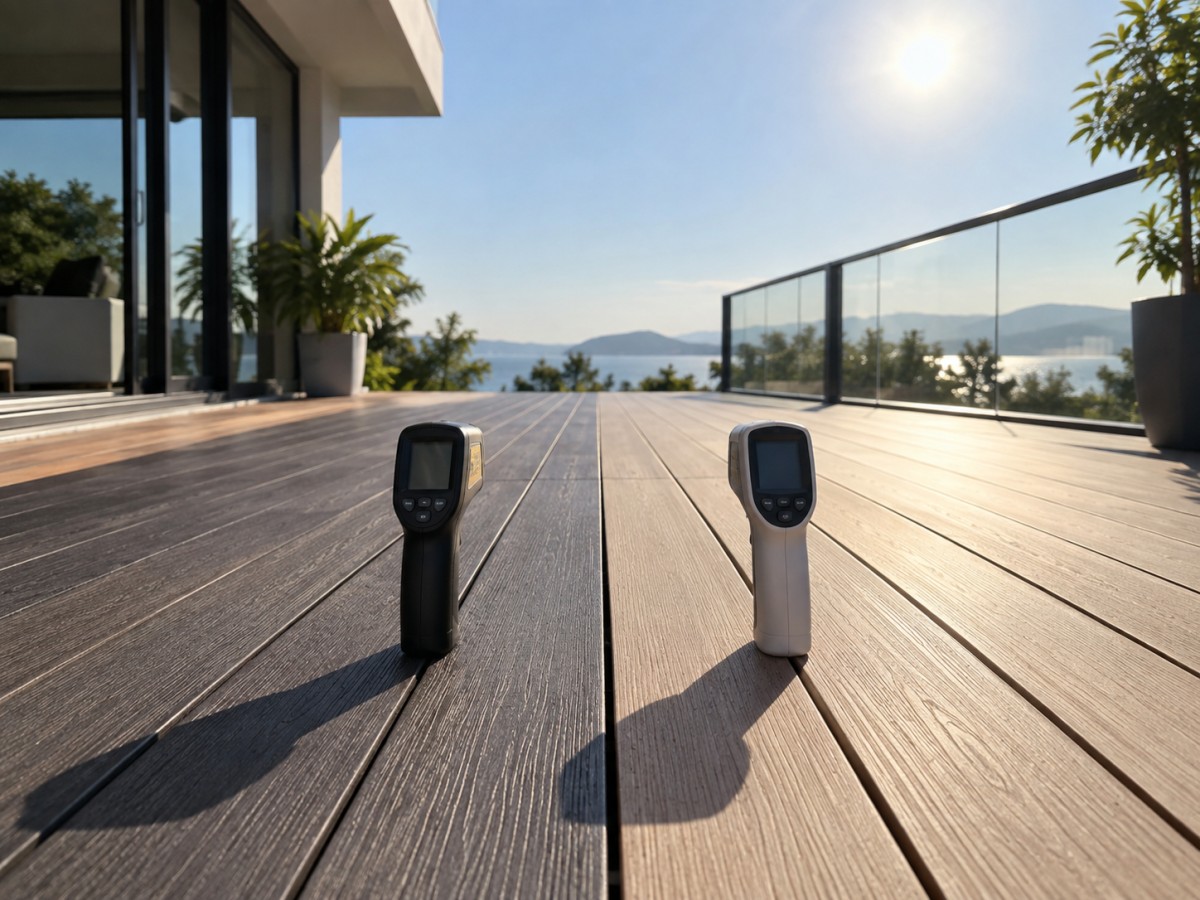
Board colour can influence how much solar energy a decking surface absorbs. Darker surfaces commonly absorb more solar energy than lighter surfaces under comparable conditions.
This does not mean every dark WPC product will reach the same temperature.
Material formulation and surface construction also matter.
However, colour deserves particular attention where the deck receives prolonged direct sunlight and is regularly used barefoot.
Comparing physical samples in conditions similar to the actual site can provide more useful information than viewing colour swatches indoors.
Dark WPC Decking in Direct Sunlight
Dark WPC decking can become noticeably warm under strong direct sunlight. This is especially relevant on exposed balconies, terraces and pool decks.
The visual effect may still suit the architectural design.
The practical question is whether the expected heat exposure matches how the space will be used.
An area primarily used in the evening may have different requirements from a pool deck used during midday.
Material selection should therefore consider both appearance and the time of day when the outdoor space is most frequently occupied.
Lighter WPC Colours
Lighter WPC colours can be considered when reducing solar heat absorption is an important design objective. Colour alone, however, cannot guarantee a particular surface temperature.
The product formulation still matters.
So do sunlight intensity, duration, ventilation and surrounding materials.
A light board exposed to uninterrupted tropical sun can still become warm.
Colour should therefore be treated as one component of heat management rather than a complete solution.
WPC Composition and Heat
WPC composition influences thermal behaviour because the boards contain both wood-derived material and polymer. Different manufacturers use different formulations and manufacturing methods.
This means there is no universal WPC temperature that applies to every product.
The proportion and type of polymer, wood-derived content, pigments, additives and surface construction can influence how a board responds to solar exposure.
Product-specific information is therefore more useful than general assumptions about composite decking.
Solid and Hollow WPC Profiles
WPC boards can use solid, hollow or other engineered internal profiles. These differences influence board construction, weight and installation requirements.
They may also contribute to differences in thermal behaviour between products.
However, profile type alone should not be used to predict which board will feel cooler.
The complete formulation and surface design also matter.
Heat-sensitive projects should therefore compare actual products rather than assuming all solid or all hollow boards behave in the same way.
Capped and Uncapped WPC
Capped and uncapped WPC have different surface constructions. Capped products incorporate an additional outer layer around part or all of the composite core, depending on the product design.
The surface layer can influence colour, texture, weathering and thermal characteristics.
Uncapped products expose the composite material directly at the surface.
Neither construction can be assumed to have one universal temperature response.
Product specifications and practical exposure conditions remain necessary when comparing them.
Surface Texture and Heat
Surface texture can influence how a decking board feels underfoot, although texture alone does not determine the actual temperature of the material.
WPC products can have embossed wood patterns, grooves or smoother surfaces.
These textures alter the points of contact between the foot and the board.
They can also affect how water and dirt remain on the surface.
For barefoot applications, both actual heat and tactile characteristics should therefore be considered.
How Long Sunlight Hits the Deck
The duration of direct sunlight can significantly influence surface temperature. A deck receiving one hour of morning sun experiences different conditions from one exposed to several hours of afternoon sunlight.
Orientation is therefore important.
West-facing areas can receive strong afternoon solar exposure.
Surrounding buildings can create periods of shade at particular times of day.
A site assessment should identify when the deck receives direct sun and when people are most likely to use the space.
Does Regular Timber Decking Get Hot Too?
Timber decking also becomes warm when exposed to direct sunlight. WPC is therefore not the only decking material affected by solar heat.
The materials have different thermal characteristics.
Natural timber consists of solid wood, while WPC combines wood-derived material with polymer.
Their surface temperatures can therefore differ under comparable conditions.
The actual comparison depends on timber species, WPC formulation, colour, exposure and other site factors.
Timber and Surface Temperature
Natural timber absorbs solar energy and warms under direct sunlight. Darker timber surfaces and finishes can influence heat absorption.
Shade remains an important factor.
A natural timber deck under a covered patio may feel substantially different from the same species installed in an exposed open area.
Timber should therefore not be described as remaining cool under all outdoor conditions.
It is still subject to solar heating.
WPC vs Timber Heat Behaviour
WPC vs timber heat cannot be reduced to one universal temperature difference because both material categories contain substantial variation. Different WPC formulations and different timber species can behave differently.
A useful comparison focuses on the factors influencing each surface.
| Heat Factor | WPC Decking | Timber Decking |
|---|---|---|
| Direct sunlight | Can increase surface temperature | Can increase surface temperature |
| Colour | Important | Important |
| Material composition | Product-specific composite formulation | Natural wood species |
| Main movement consideration | Thermal expansion | Moisture-related movement |
| Shade | Reduces direct solar exposure | Reduces direct solar exposure |
| Barefoot comfort | Product and exposure dependent | Species and exposure dependent |
| Cooling conditions | Influenced by shade and airflow | Influenced by shade and airflow |
Actual product and site conditions provide a better comparison than general material labels.
Why WPC Can Feel Different From Timber
WPC can feel different from natural timber because polymer forms part of the composite structure. This changes the material's thermal properties.
Surface texture can also affect the experience underfoot.
A smooth composite board and a naturally textured timber board may feel different even if their measured surface temperatures are relatively close.
Barefoot comfort therefore includes both temperature and tactile sensation.
Physical samples can help users understand these differences before selecting a decking system.
Does WPC Stay Hot After the Sun Moves?
WPC can remain warm for a period after direct sunlight reduces because the board has absorbed thermal energy. How quickly it cools depends on the product and environmental conditions.
Airflow can support cooling.
Shade prevents continued direct solar loading.
Surrounding surfaces can also influence the local temperature.
A deck surrounded by heat-absorbing walls or paving may experience a different cooling pattern from an open garden deck.
The entire outdoor environment should therefore be considered.
Shade Is One of the Most Effective Heat Considerations
Shade reduces the amount of direct solar radiation reaching the decking surface. It can therefore have a substantial influence on outdoor surface temperature.
Shade can come from several sources:
The appropriate option depends on the space and intended use.
Shade design can often influence comfort more significantly than changing between two visually similar decking colours.
Permanent Roofs and Covered Decks
A permanent roof can substantially reduce direct sunlight on WPC decking. Covered patios and balconies therefore often experience different thermal conditions from exposed decks.
Coverage does not eliminate climate considerations.
Rain can still enter through open sides, and shaded surfaces may dry more slowly.
Ventilation and drainage remain important.
A covered WPC deck should therefore be designed for both reduced solar exposure and tropical moisture conditions.
Pergolas and Partial Shade
Pergolas can provide partial or changing shade depending on their design. They can reduce periods of direct solar exposure while maintaining an open outdoor character.
The shade pattern changes throughout the day.
This should be considered when positioning seating or circulation areas.
A pergola that shades the deck in the morning may provide limited protection from low-angle afternoon sunlight.
Orientation therefore matters alongside the structure itself.
Trees and Landscape Shade
Trees can reduce direct sunlight and create a more naturally shaded outdoor environment. They can be particularly useful around garden decks.
Vegetation also introduces maintenance considerations.
Leaves, flowers and other organic material can accumulate on WPC boards and within drainage gaps.
Shaded areas may also remain damp longer.
Landscape shade should therefore be combined with regular cleaning and suitable airflow.
Ventilation and Outdoor Comfort
Ventilation can influence how an outdoor space feels and how quickly surfaces release heat after direct exposure. It does not prevent solar radiation from heating the board.
An open deck with good airflow may feel more comfortable than an enclosed area with limited air movement.
Ventilation is also important after rainfall.
Airflow supports drying beneath and around the decking.
This means ventilation contributes to both thermal comfort and moisture management.
Under-Deck Ventilation
Ventilation beneath WPC decking supports the overall environmental conditions around the boards and substructure. The exact requirements depend on the decking system.
Low-clearance decks can have more restricted airflow.
Perimeter construction should not unnecessarily block ventilation where the system requires it.
Under-deck airflow should not be treated as a guaranteed way to keep the upper surface cool under direct sun.
Its primary role is broader system performance and drying.
Surrounding Materials Can Affect Heat
The materials around a WPC deck can influence the thermal environment. Walls, glazing, roofing and hard paving can absorb or reflect solar energy.
Large glass surfaces can also change the amount and direction of solar exposure reaching an outdoor area.
Dark walls or roofing may contribute to a warmer local environment.
Landscape planting and shaded surfaces can create different conditions.
Decking selection should therefore consider the complete outdoor design rather than the boards in isolation.
Choosing WPC Decking for Hot Outdoor Areas
WPC for highly exposed outdoor spaces should be selected with surface temperature, colour, shade and intended use in mind. Product-specific information is particularly useful.
A practical selection process can follow these steps:
This approach helps match the material to the actual thermal conditions of the site.
Choosing Colour for Sun-Exposed WPC Decking
Colour should be considered together with the architectural design and expected sun exposure. Lighter colours may be worth considering where reducing heat absorption is a priority.
Dark colours may still suit spaces with substantial shade or use concentrated outside peak sunlight hours.
Colour selection should therefore not happen independently from site assessment.
A sample viewed indoors may look very different under strong outdoor sunlight.
Where possible, samples should be considered in lighting conditions similar to the intended installation.
Why Product Samples Matter
Physical WPC samples help evaluate colour, texture and tactile characteristics more accurately than photographs alone. They can also provide a practical reference for comparing products.
A short sample cannot reproduce every condition of a full installed deck.
However, placing samples in direct sunlight can provide useful comparative information about how different colours and surfaces respond.
Comparisons should be made under similar conditions.
One sample in shade and another in direct sun would not provide a meaningful material comparison.
Ask About Product-Specific Thermal Information
Product-specific information is more useful than general statements about all WPC decking. Manufacturers may provide technical guidance or other information relevant to outdoor use.
Buyers can ask about:
These questions help connect heat considerations with the broader decking system.
Thermal Expansion Is Different From Surface Heat
Thermal expansion and surface temperature are related to heat but describe different issues. Surface temperature concerns user comfort, while thermal expansion concerns physical board movement.
A WPC board can expand as its temperature increases.
Installation should allow for this movement.
The required gaps depend on the actual product, board length and installation conditions.
Comfort measures such as shade do not remove the need to follow product-specific expansion requirements.
Both factors should be addressed independently.
Expansion Gaps Around Fixed Structures
WPC boards need suitable clearance around walls, columns and other fixed boundaries according to the decking system requirements. This allows expected thermal movement.
Long board runs can make movement allowances particularly important.
The deck should not be installed tightly against surrounding structures without considering expansion.
Maintenance should also keep these gaps reasonably clear.
Hard debris packed into movement spaces can interfere with the intended installation design.
Heat and Concealed Fastening Systems
Concealed fastening systems used with WPC should accommodate the board's expected thermal behaviour. Clips and grooves are commonly designed as part of the specific decking system.
The fastening method should not be assumed interchangeable between products.
Clip spacing, joist spacing and board clearances should follow the requirements for the selected WPC.
A visually clean surface still depends on correct technical installation.
Hidden fasteners do not eliminate expansion or contraction.
Poolside WPC Selection
Poolside WPC should be selected with barefoot comfort, wet conditions, drainage and sunlight considered together. Heat is only one of several relevant factors.
A highly exposed dark board may warrant additional assessment.
Surface texture should also be appropriate for the intended environment.
Drainage should allow water to leave efficiently.
Shade around seating and circulation areas can further improve how the outdoor space functions during periods of strong sun.
Balcony WPC Selection
Balcony WPC should be selected according to orientation, shade, drainage and available installation height. Sun exposure can differ substantially even between units within the same building.
An east-facing balcony may experience a different heat pattern from a west-facing one.
Upper-floor balconies may also receive less shade from surrounding buildings.
The board colour and product should therefore be evaluated for the specific unit rather than chosen solely from a general condominium decking recommendation.
Outdoor Dining Areas
Outdoor dining areas should consider when the deck will be occupied and whether tables, chairs or shade structures alter exposure. WPC beneath furniture can remain visually and thermally different from open sections.
Restaurants and residential patios used mainly in the evening may have different heat priorities from daytime recreational spaces.
Furniture movement should also be considered during cleaning.
The decking system should support both thermal comfort and practical everyday use.
Ways to Improve Comfort on Hot WPC Decking
Outdoor comfort can often be improved through design measures that reduce direct solar exposure and respond to how the space is used. Changing the decking material is not always the only available approach.
Useful measures include:
These measures can be considered during both initial design and future outdoor-space improvements.
Common Misconceptions About WPC Decking Heat
WPC heat is often discussed using simplified claims that overlook differences between products and environments. Several misconceptions should be avoided.
WPC Never Gets Hot
WPC can become hot under direct sunlight.
The degree depends on product and site conditions.
All WPC Reaches the Same Temperature
WPC products differ in formulation, colour, surface and construction.
A single temperature cannot represent the entire category.
Only WPC Gets Hot Outdoors
Timber, tiles, stone and other outdoor surfaces also absorb solar energy and become warm.
The thermal behaviour differs between materials.
Light-Coloured WPC Always Stays Cool
Lighter colour can influence solar absorption, but direct tropical sunlight can still warm the surface.
Shade and exposure remain important.
Watering the Deck Is the Best Heat Solution
Wet surfaces may temporarily feel different, but routinely applying water is not a substitute for suitable material selection and shade.
Water management should remain focused on proper drainage.
Ventilation Prevents Surface Heating
Airflow can support comfort and cooling but does not stop direct solar radiation from heating the upper surface.
Shade is more directly related to reducing solar exposure.
Frequently Asked Questions (FAQs)
Does WPC decking get hot in Malaysia?
Yes. WPC decking can become hot when exposed to strong direct sunlight in Malaysia. The actual surface temperature depends on colour, product formulation, sun exposure, shade, airflow and surrounding conditions.
Is WPC hotter than timber?
WPC and timber have different thermal characteristics, but there is no universal temperature difference that applies to every product and species. Actual materials should be compared under similar exposure conditions.
Does darker WPC get hotter?
Colour can influence solar heat absorption, with darker surfaces generally warranting more attention in highly exposed areas. Product formulation and other environmental factors also affect surface temperature.
Is light-coloured WPC suitable for sunny areas?
Lighter WPC may be considered where heat absorption is an important concern, but it can still become warm in direct sunlight. Shade, product characteristics and intended use should also be evaluated.
Can WPC decking be used around swimming pools?
Suitable WPC products can be considered for poolside applications. Surface temperature, frequent wetting, drainage, surface characteristics and barefoot use should all form part of the selection process.
How can I make WPC decking feel cooler?
Reducing direct solar exposure through roofs, pergolas, umbrellas or appropriate landscape shade can improve comfort. Lighter board colours and suitable airflow may also be considered.
Does WPC cool down after sunset?
WPC generally releases stored heat as environmental conditions cool, but the rate depends on the board and surroundings. Airflow, shade and nearby heat-retaining surfaces can influence cooling.
Does WPC expand when it gets hot?
Yes. WPC can expand with increasing temperature and contract as it cools. Installation gaps should follow the requirements of the specific decking product.
Is a shaded WPC deck cooler?
Shade generally reduces direct solar radiation reaching the decking surface, which can substantially reduce solar heating. Shaded decks may, however, dry more slowly after rainfall and require appropriate drainage and cleaning.
Should I test WPC samples before choosing a colour?
Physical samples can help compare colour and surface characteristics. Where practical, comparing samples under similar direct-sun conditions can provide more useful information for a highly exposed project.
Managing Heat Through Material and Outdoor Design
WPC decking can become hot in Malaysia when exposed to strong direct sunlight, but composite decking heat cannot be described using one temperature or one rule for every product. Board colour, formulation, surface design, orientation, shade and surrounding conditions all influence the result.
Heat should also be considered according to how the outdoor space is used. Pool decks and other barefoot areas require different comfort considerations from balconies or commercial terraces primarily occupied after sunset.
Natural timber also becomes warm under direct sun, so the decision should not be based on the assumption that only composite decking experiences solar heating. Actual products and site conditions provide a more meaningful comparison.
Shade can play a major role in outdoor comfort. Roofs, pergolas, umbrellas, vegetation and surrounding architecture can reduce direct solar exposure, while appropriate airflow contributes to the overall outdoor environment.
For WPC decking, heat also affects installation because boards can expand and contract with temperature. Product-specific spacing and fastening requirements should therefore remain part of the design even when shade is used to improve surface comfort.