
When it comes to construction projects, the best timber for outdoor decking in Malaysia depends on the site's exposure, intended use, timber characteristics, maintenance expectations and the quality of the material supplied. Chengal, Merbau, Balau, Belian and teak are among the tropical hardwoods associated with exterior applications, but they differ in density, natural durability, colour, grain and availability.
Malaysia's tropical climate makes these differences particularly important. Outdoor decking can experience frequent rain, high humidity, strong UV exposure and repeated wet-dry cycles throughout the year. Timber that performs well outdoors must be considered not only for its initial appearance but also for how it responds to moisture, sunlight and long-term exposure.
There is therefore no single best wood for outdoor decking for every property. A hardwood suitable for a covered residential balcony may not necessarily be the preferred choice for an exposed garden deck, poolside area or heavily used commercial space.
This guide compares Chengal, Merbau, Balau, Belian and Burmese Teak by their practical characteristics. It focuses specifically on timber species selection so that it complements broader guidance about decking materials, installation and maintenance rather than repeating those topics.
What Makes a Timber Suitable for Outdoor Decking?
A timber suitable for outdoor decking needs physical and durability characteristics appropriate for exterior exposure. Density, natural durability, dimensional behaviour, grain, moisture response and surface characteristics all influence how the wood performs.
Timber species should not be selected according to hardness or colour alone. Outdoor performance is the result of several characteristics working together.
Natural Durability
Natural durability refers to the inherent resistance of timber to biological deterioration under particular exposure conditions. It varies substantially between species and can also differ between heartwood and sapwood within the same tree.
Heartwood is the inner, generally darker part of the tree, while sapwood is the younger outer wood. These portions can have different durability characteristics even when they come from the same species.
For outdoor decking, the actual material supplied therefore matters in addition to the species name.
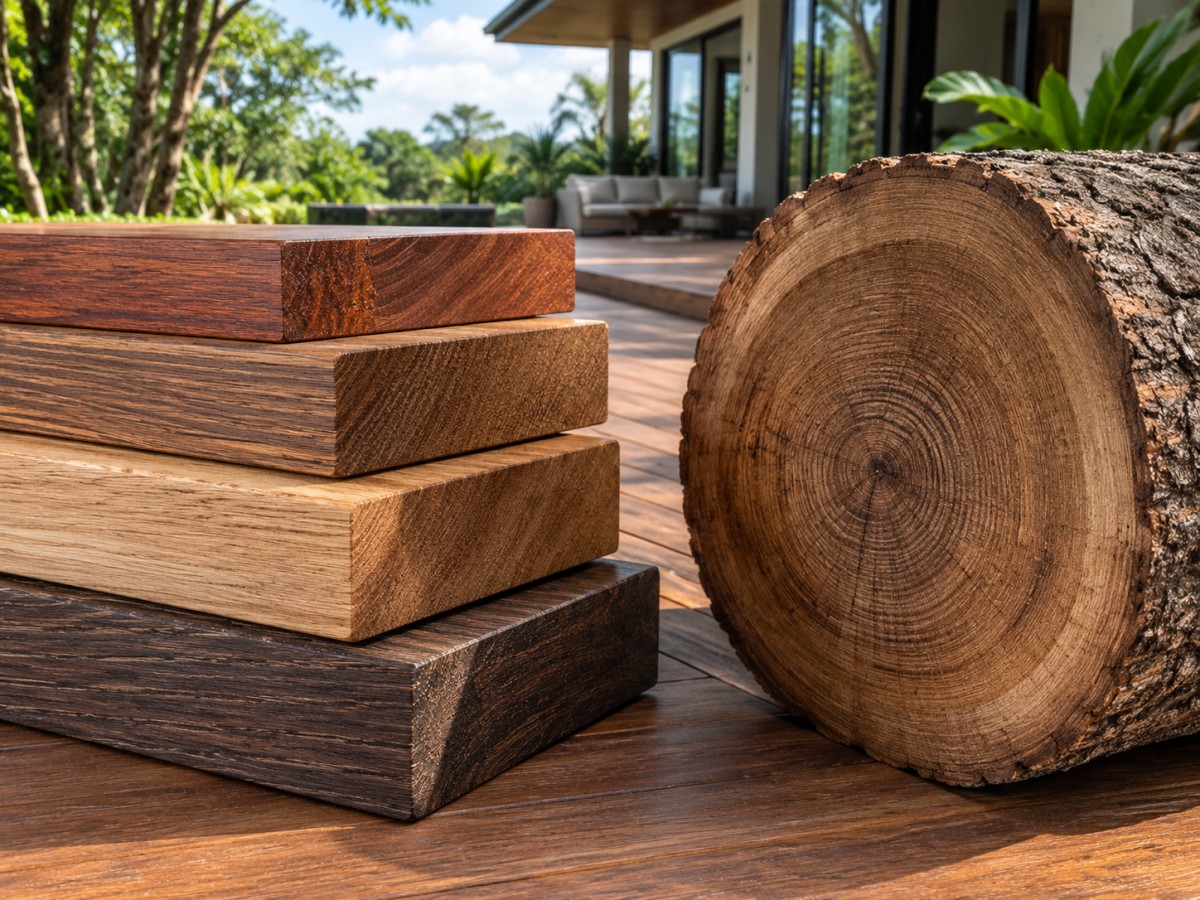
Density
Density describes the mass of timber relative to its volume. Many tropical hardwoods used in demanding outdoor applications are relatively dense, although high density alone does not guarantee outdoor suitability.
Dense wood can provide a substantial walking surface and good resistance to physical wear. It can also require appropriate tools, drilling and fastening techniques during installation.
Density should therefore be viewed as one material characteristic rather than a standalone measure of quality.
Dimensional Stability
Dimensional stability describes how timber changes in size and shape as moisture conditions change. All natural wood absorbs and releases moisture, although the amount and pattern of movement vary between species.
Outdoor decking needs to accommodate this movement. Timber with favourable stability characteristics can be useful, but correct board preparation, spacing and installation remain necessary.
Grain and Surface Characteristics
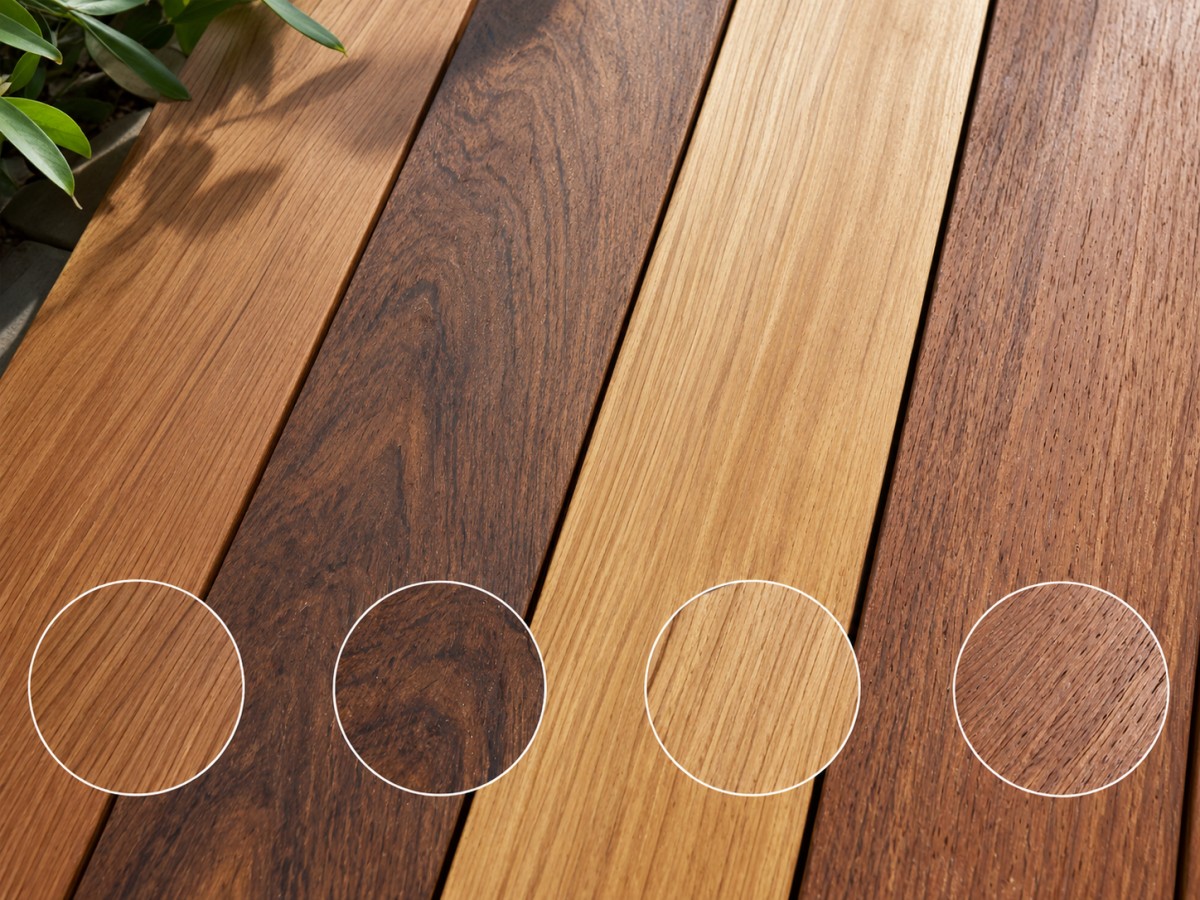
Grain affects both appearance and how the timber surface behaves. Some species have relatively straight grain, while others display interlocking or more pronounced patterns.
Texture and grain can also influence machining and finishing. Natural variation should be expected because timber boards are not manufactured to have identical patterns.
Suitability for the Intended Environment
A timber should be matched to the conditions where it will be used. Exposure to rain, shade, landscaping, pool water or heavy pedestrian use can change the practical requirements.
This means the best timber choice is site-specific. Species characteristics provide a starting point, but the environment ultimately determines which characteristics matter most.
Chengal Decking
Chengal is a Malaysian tropical hardwood known for its historical use in heavy construction and exterior applications. Its natural durability and density are key reasons it is associated with outdoor timber work in Malaysia.
Chengal, botanically associated with Neobalanocarpus heimii, is native to Peninsular Malaysia. It has traditionally been used where durable timber characteristics are required.
Appearance of Chengal
Chengal typically presents natural brown tones that can deepen or change as the timber ages and is exposed to outdoor conditions. Exact colour varies according to individual boards, age and material condition.
The grain contributes to a distinctly natural hardwood appearance. Variation between boards should be expected rather than treated as inconsistency.
Like other natural timber, the original colour does not remain permanently unchanged outdoors. Sunlight and weather gradually influence the surface.
Chengal's Outdoor Characteristics
Chengal is recognised as a dense and naturally durable Malaysian hardwood. These characteristics explain its historical association with structural and exterior uses.
For decking, its density can provide a substantial surface under normal outdoor use. Dense material also means machining and fastening should be carried out appropriately.
Its natural durability does not make it unaffected by moisture or weather. The deck still needs appropriate drainage, ventilation and routine care.
Where Chengal May Be Considered
Chengal may be considered for residential and commercial outdoor decking where a Malaysian tropical hardwood is specified and suitable material is available.
Possible applications include terraces, gardens, outdoor walkways and other exposed spaces. Actual suitability depends on site conditions and project specifications.
Responsible sourcing should be considered when specifying any tropical hardwood, particularly species subject to availability or conservation considerations.
Merbau Decking
Merbau is a tropical hardwood commonly associated with flooring, decking and exterior joinery. It is recognised for its density, distinctive brown to reddish-brown colour and visible grain.
The timber is obtained from Intsia species occurring in parts of Southeast Asia and the Pacific. Because timber origin and supply can vary, sourcing information is relevant when specifying Merbau.
Appearance of Merbau
Merbau commonly has warm brown, orange-brown or reddish-brown tones. Individual boards can show noticeable colour and grain variation.
Its appearance may deepen after exposure or finishing, while prolonged outdoor weathering can gradually alter the original colour.
Natural variation makes sample boards useful when appearance is important. A small sample, however, cannot represent every board in a completed deck.
Merbau's Outdoor Characteristics
Merbau is a dense hardwood with characteristics that have led to its use in exterior applications. It can provide a solid decking surface when suitable boards are correctly installed.
One characteristic associated with Merbau is the presence of natural extractives. Under certain wet conditions, extractives can migrate from the wood and cause coloured runoff or staining on adjacent surfaces.
This should be considered during material selection and project planning, particularly where light-coloured walls, paving or finishes are located nearby.
Where Merbau May Be Considered
Merbau can be considered for residential terraces, balconies, garden decks and other outdoor spaces where its appearance and material properties fit the project.
Its distinctive colour can work particularly well where warm natural timber tones are desired.
Site drainage and adjacent materials should be considered because of the potential for extractive-related staining during weather exposure.
Balau Decking
Balau is a commercial name associated with several dense Shorea species used in structural and exterior timber applications. It is commonly encountered in Southeast Asian construction and outdoor timber products.
Because "Balau" can refer to timber within a broader group rather than one individual species, accurate material identification and grade information are useful when assessing it for decking.
Appearance of Balau
Balau generally presents yellow-brown, reddish-brown or darker brown tones depending on the species and individual board.
The grain and texture can vary. These natural differences create a less uniform surface than manufactured outdoor flooring.
Weather exposure gradually changes the colour, particularly in areas receiving direct sunlight and rain.
Balau's Outdoor Characteristics
Balau is generally known as a dense tropical hardwood. Density contributes to its use in applications where a robust timber surface is required.
Its density also affects installation. Cutting, drilling and fixing methods need to be appropriate for the actual timber to minimise avoidable splitting or fastening problems.
As with other species, performance depends on more than density. Material quality, moisture condition, construction and environmental exposure remain important.
Where Balau May Be Considered
Balau may be considered for decks, terraces, walkways and landscape applications where dense tropical hardwood is suitable.
The specific material supplied should be checked because commercial naming can cover multiple species or grades.
A specification based only on the word "Balau" may therefore provide less certainty than one that includes appropriate information about the actual timber.
Belian Decking
Belian, commonly associated with Eusideroxylon zwageri, is an exceptionally dense Southeast Asian hardwood historically used in demanding structural and outdoor applications. It is sometimes referred to as Borneo ironwood.
Its reputation is closely connected to its natural durability and heavy, dense structure. However, availability and sourcing are important considerations when evaluating Belian for a new decking project.
Appearance of Belian
Belian generally develops brown to dark brown tones, with natural variation according to the material and age.
Its dense structure gives it a visually substantial hardwood character. Like other outdoor wood, surface colour changes as it is exposed to sunlight and weather.
Older Belian may appear very different from freshly prepared material, so appearance should not be assessed from colour descriptions alone.
Belian's Outdoor Characteristics
Belian has historically been used for demanding applications because of its high density and natural durability characteristics.
Its density can make machining and installation more demanding. Appropriate tools, drilling and fastening methods are necessary when working with heavy hardwoods.
The same principle that applies to other durable timber also applies to Belian: natural durability does not eliminate the need for good deck design and moisture management.
Availability and Sourcing Considerations
Belian should be evaluated with particular attention to source, legality and availability. Certain tropical hardwood resources face supply and conservation pressures, making traceable sourcing important.
A technically suitable species is not automatically the appropriate specification if reliable or responsible supply cannot be established.
For this reason, material availability should be confirmed before a project design becomes dependent on Belian.
Burmese Teak Decking
Burmese Teak refers to teak associated with Tectona grandis originating from Myanmar. Teak is internationally recognised for its use in exterior furniture, marine applications, joinery and other environments where dimensional stability and outdoor characteristics are valued.
The term "teak" should be used carefully because timber sold under similar names may differ in species, origin, age, grade and growing conditions.
Appearance of Teak
Teak is commonly associated with golden-brown to medium-brown tones and a distinctive natural grain. Colour can vary significantly between boards and sources.
Freshly finished teak and weathered teak look different. With prolonged outdoor exposure, untreated surfaces can gradually develop a grey or silver-grey appearance.
This colour change is primarily a surface weathering process and should not automatically be interpreted as loss of structural integrity.
Teak's Outdoor Characteristics
Teak is known for natural oils and dimensional characteristics that contribute to its long history of exterior use.
These characteristics can make it relevant for outdoor environments, but the quality and origin of the actual timber remain important. Plantation-grown teak and mature natural-forest teak, for example, should not automatically be assumed to have identical properties.
Material documentation is therefore valuable when teak is specified for a project.
Where Teak May Be Considered
Teak may be considered for terraces, balconies and selected outdoor spaces where its particular appearance and material characteristics are desired.
It is also familiar in settings where outdoor furniture and decking are intended to share similar natural wood tones.
The expected weathered appearance should be discussed before selection because maintaining a golden-brown appearance involves different care from allowing natural greying.
Comparing Chengal, Merbau, Balau, Belian and Teak
Chengal, Merbau, Balau, Belian and teak have different characteristics, so comparison should focus on project requirements rather than trying to identify one universal winner. Each timber also varies naturally according to source, grade and individual boards.
The following table provides a practical comparison.
| Timber | General Character | Typical Appearance | Notable Consideration | Potential Outdoor Context |
|---|---|---|---|---|
| Chengal | Dense Malaysian tropical hardwood | Natural brown tones | Availability and responsible sourcing | Terraces, gardens, outdoor decks |
| Merbau | Dense tropical hardwood | Warm brown to reddish-brown | Natural extractives may cause runoff | Balconies, terraces, garden decks |
| Balau | Dense hardwood group | Yellow-brown to darker brown | Commercial name can cover different material | Decks, walkways, landscapes |
| Belian | Very dense Southeast Asian hardwood | Brown to dark brown | Availability, sourcing and machining | Selected demanding outdoor uses |
| Burmese Teak | Naturally oily tropical hardwood | Golden to medium brown | Origin and grade affect material characteristics | Terraces and selected outdoor spaces |
The table describes broad material characteristics rather than guaranteed performance. Actual boards should be assessed before specification.
Durability and Climate Considerations
Durability in Malaysia depends on how timber characteristics interact with high humidity, frequent rainfall, strong sunlight and the construction of the deck. Natural durability is important, but environmental management remains necessary for every species.
Rainfall and Moisture
Rain repeatedly increases the moisture exposure of outdoor timber. The wood subsequently dries according to temperature, airflow, sunlight and surrounding humidity.
Repeated moisture changes can contribute to expansion, contraction and surface weathering.
Timber species with recognised natural durability may tolerate exterior conditions better than unsuitable woods, but persistent standing water remains undesirable.
High Humidity
Malaysia's consistently high humidity means outdoor wood may spend significant periods at elevated moisture levels. Sheltered areas can also dry more slowly than exposed areas receiving direct sun.
Species selection should therefore be accompanied by appropriate board preparation and installation.
The objective is not to prevent natural wood from responding to moisture but to create conditions in which normal movement can occur without unnecessary restriction.
UV Exposure
Sunlight gradually affects the colour and surface of every timber discussed in this guide.
Chengal, Merbau, Balau, Belian and teak do not retain their freshly installed appearance indefinitely when continuously exposed outdoors.
Owners should distinguish between colour weathering and structural deterioration. They are not necessarily the same process.
Wet-Dry Cycles
A tropical deck can become wet during heavy rain and then heat quickly when direct sunlight returns. Repeated cycles create changing moisture conditions across the timber.
Board dimensions, grain orientation, material condition and species characteristics influence how individual boards respond.
This is another reason species should be considered alongside material quality rather than by name alone.
Appearance and Natural Colour Variation
Hardwood decking has natural variation because every board comes from a different part of a tree. Colour, grain and texture therefore differ even within timber of the same species.
This variation is one of the defining differences between natural hardwood and manufactured decking.
Initial Colour
Newly installed timber often shows its strongest natural colour variation. Some boards may appear lighter or darker than neighbouring pieces.
Finishing can alter the appearance, but it does not make natural wood completely uniform.
Colour After Weathering
UV exposure, rainfall and oxidation gradually change timber colour. Exposed areas generally weather faster than covered areas.
A deck partly shaded by a roof can therefore develop different tones across the same surface.
Grain Variation
Grain patterns depend on species and how individual boards are cut from the log.
Some users prefer relatively consistent boards, while others value pronounced variation. Sample viewing can help establish expectations, although no small sample can reproduce the exact appearance of a complete natural timber installation.
Maintenance Differences Between Hardwood Species
All natural hardwood decking requires some level of maintenance, although the exact routine depends on timber, exposure and desired appearance. A naturally durable species should not be interpreted as maintenance-free.
Routine cleaning removes leaves, dirt and organic material that can retain moisture. Periodic inspection can also identify localised issues with boards, fixings or surrounding drainage.
Surface treatment is primarily relevant where a particular appearance or finish is to be maintained. Owners who allow timber to weather naturally may follow a different surface-care approach.
Species characteristics can influence how timber accepts finishes or how quickly its appearance changes, but site exposure often has an equally important effect.
Matching Timber to Different Outdoor Applications
Timber selection should reflect how an outdoor space is used. The same hardwood may perform differently depending on exposure, traffic and surrounding construction.
Residential Balconies
Balconies generally benefit from timber that suits the available installation height, drainage arrangement and desired appearance.
Because some balconies are partially sheltered, weather exposure can vary considerably even within a single deck.
Chengal, Merbau, Balau or teak may be considered depending on material availability and project requirements.
Garden Terraces
Garden terraces are frequently exposed to leaves, soil, moisture and surrounding vegetation. Material selection should therefore be combined with a layout that can be cleaned and inspected.
Dense tropical hardwoods are commonly associated with this type of outdoor environment.
Natural timber can visually integrate with planting and landscape elements, although vegetation should not continually trap moisture against the boards.
Poolside Areas
Poolside decks experience regular wetting in addition to rain. Timber characteristics, surface condition and drainage therefore require careful evaluation.
The selected species should be appropriate for the specific project conditions.
Regular inspection is also important because constantly wet areas can behave differently from dry terraces.
Commercial Outdoor Spaces
Commercial decks may experience higher pedestrian traffic and more intensive use. Restaurants, hospitality properties and public-facing areas can also require frequent cleaning.
Material selection should therefore consider durability characteristics, surface condition and operational requirements.
Project-specific structural, safety and accessibility requirements should also be addressed independently of timber selection.
Choosing Between Chengal, Merbau, Balau, Belian and Teak
Choosing between these hardwoods requires identifying which material characteristics matter most for the project. Species names alone do not provide enough information for a reliable decision.
A practical evaluation can follow several steps.
Establish the Exposure Conditions
Determine whether the deck will be fully exposed, partially covered or predominantly sheltered.
Rain, sunlight and shade affect weathering and moisture conditions.
Define the Intended Use
Identify whether the deck will serve a private balcony, family terrace, garden, pool surround, walkway or commercial area.
Different uses create different traffic and environmental requirements.
Confirm the Timber Species
The actual species should be identified as accurately as possible.
This is particularly important for commercial group names such as Balau and for products described simply as "teak" or "hardwood".
Review Material Quality
Species does not replace quality assessment. Boards should be suitable for the intended decking application and appropriately prepared.
Natural characteristics and acceptable variation should also be understood before installation.
Consider Weathered Appearance
Decide whether natural greying or colour change is acceptable.
If maintaining a particular timber colour is important, the required surface-care approach should be considered before selection.
Check Sourcing and Availability
Timber origin and availability should form part of material evaluation.
Responsible sourcing is particularly important for tropical hardwoods, where species and supply chains can differ substantially.
Timber Selection by Project Priority
Different hardwood characteristics become relevant depending on the project's main requirement. The following table provides a selection framework without treating one species as universally superior.
| Project Consideration | Timber Characteristics to Review |
|---|---|
| Malaysian hardwood preference | Chengal and other locally relevant species |
| Warm reddish-brown appearance | Merbau characteristics |
| Dense tropical hardwood | Chengal, Merbau, Balau or Belian characteristics |
| Golden-brown timber appearance | Teak characteristics |
| Highly exposed environment | Natural durability plus site-specific suitability |
| Heavy-use environment | Density, board quality and complete system design |
| Natural weathered appearance | Weathering characteristics of the selected species |
| Traceable material requirement | Verified species, origin and sourcing documentation |
This framework should be combined with assessment of the actual boards and installation environment.
Why Timber Source and Identification Matter
Timber source and identification matter because material properties can vary even when similar commercial names are used. Accurate information supports more reliable specification and helps avoid assumptions based solely on appearance.
This is especially relevant for tropical hardwoods.
A buyer evaluating timber can ask for information about:
- ✓ Species or commercial timber classification
- ✓ Material origin where available
- ✓ Board dimensions and preparation
- ✓ Suitability for exterior decking
- ✓ Available sourcing documentation
These details provide a more useful basis for comparison than colour samples alone.
Responsible sourcing also supports better material transparency. Where certification or traceability documentation is required by the project, it should be verified rather than assumed.
Common Misunderstandings About Hardwood Decking
Several assumptions can make hardwood comparison less accurate. Understanding these limitations helps buyers evaluate timber according to measurable characteristics.
The Hardest Timber Is Automatically the Best
Hardness or density alone does not determine outdoor suitability. Dimensional behaviour, natural durability, board quality and environmental conditions also matter.
Very dense timber can also require more specialised machining and fastening.
All Boards of the Same Species Perform Identically
Natural timber varies. Growing conditions, board position within the tree, moisture condition, grade and preparation can influence individual pieces.
Species provides useful information, but it does not remove natural variation.
Durable Timber Does Not Need Maintenance
Natural durability relates to the inherent properties of the wood. It does not prevent dirt accumulation, surface weathering or every possible form of deterioration.
Routine cleaning and inspection remain relevant.
Colour Determines Timber Quality
Colour varies naturally and changes with age, exposure and finishing.
A darker board is not automatically stronger or more durable than a lighter board of the same species.
Weathered Timber Is Necessarily Damaged
Surface greying is often a normal result of outdoor exposure. Structural deterioration and surface colour change are different issues.
Where condition is uncertain, physical inspection is more informative than colour alone.
Frequently Asked Questions (FAQs)
What is the best timber for outdoor decking in Malaysia?
There is no single timber that is best for every Malaysian deck. Chengal, Merbau, Balau, Belian and teak have different characteristics, while site exposure, intended use, sourcing and material quality also influence suitability.
Is Chengal suitable for outdoor decking?
Chengal is a dense Malaysian tropical hardwood historically associated with durable structural and exterior applications. It can be considered for outdoor decking where appropriate material is available and the complete decking system is properly designed.
Is Merbau good for outdoor decking?
Merbau is a dense tropical hardwood widely associated with flooring and exterior timber applications. It can be suitable for decking, although its natural extractives should be considered because coloured runoff can occur under certain wet conditions.
What is the difference between Chengal and Balau?
Chengal refers to a specific Malaysian timber associated with Neobalanocarpus heimii, while Balau is a commercial grouping associated with several dense Shorea timbers. Their appearance, physical properties and sourcing can therefore differ.
Can Belian be used for decking?
Belian has material characteristics associated with demanding outdoor use, but sourcing and availability require careful consideration. Its very high density also affects machining and installation requirements.
Is teak suitable for Malaysia's climate?
Teak has a long history of use in outdoor environments and can be considered for Malaysian exterior applications. Actual suitability depends on timber origin, grade, site conditions and the design of the decking system.
Which hardwood keeps its original colour outdoors?
No natural hardwood should be expected to retain its freshly installed colour indefinitely under continuous outdoor exposure. UV, rainfall and weathering gradually alter the surface. Appropriate treatments can influence appearance but require maintenance.
Does dense timber last longer outdoors?
Density can contribute to certain physical characteristics, but it does not independently determine service life. Natural durability, material quality, moisture conditions, installation and maintenance also influence long-term performance.
Why is timber identification important?
Accurate identification helps establish the expected material characteristics and reduces uncertainty created by broad labels such as "hardwood" or "teak". It can also support sourcing and specification requirements.
Selecting Hardwood for Long-Term Outdoor Use
The most appropriate hardwood is the one whose characteristics match the environment, intended use and expectations of the project. Chengal, Merbau, Balau, Belian and Burmese Teak each provide distinct combinations of density, natural durability, colour, grain and outdoor behaviour.
For Malaysian properties, climate should remain part of the selection process. Frequent rainfall, high humidity, strong sunlight and repeated wet-dry cycles affect every natural timber, including highly durable tropical hardwoods.
Material quality and sourcing are equally important. Choosing a recognised species does not compensate for unsuitable boards, uncertain identification or a decking system that cannot manage moisture effectively.
A useful hardwood comparison therefore does not end with identifying a species. It considers the actual timber, its source, the conditions of the outdoor space and how its natural appearance and behaviour align with the intended application.