
Timber decking and composite decking can both create functional outdoor surfaces, but they differ in material composition, appearance, weathering, maintenance and installation requirements. Choosing between timber decking vs composite decking depends on the conditions of the outdoor space and the characteristics the owner values most.
Natural timber is made from solid wood and provides genuine grain, colour variation and natural weathering. Composite decking, commonly including wood-plastic composite or WPC, is manufactured using wood-derived material combined with polymers and other formulation components.
Malaysia's tropical environment adds another layer to the decision. Frequent rainfall, high humidity, strong sunlight and warm temperatures mean both materials need suitable drainage, ventilation, spacing and installation.
There is therefore no universal answer to wood vs composite decking. Natural timber may suit projects where authentic wood character is a priority, while WPC may suit projects where manufactured consistency and reduced timber-specific surface maintenance are preferred.
TIMBER AND WPC DECKING EXPLAINED
Timber and WPC are fundamentally different materials even when their finished surfaces are designed for the same outdoor application. Understanding this distinction makes their performance differences easier to evaluate.
Natural timber decking uses boards cut from real wood. The properties of each board depend on timber species, density, grain, heartwood content, quality and moisture condition.
WPC decking is manufactured. Its characteristics depend on its formulation, board profile, surface construction and the specifications established by the manufacturer.
The comparison should therefore be made between specific timber and WPC options rather than assuming all wood or all composite products perform identically.
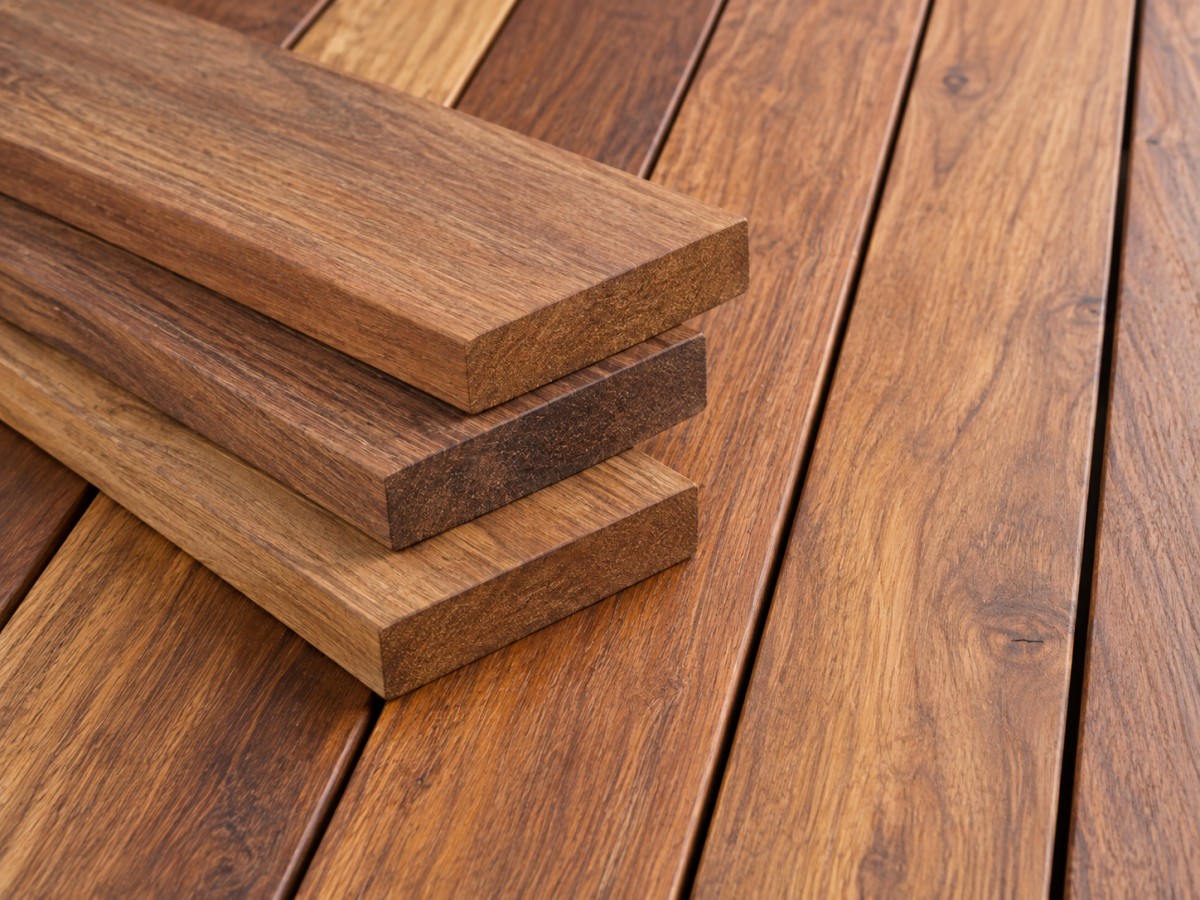
What Is Natural Timber Decking?
Natural timber decking is an outdoor flooring system using solid wood boards fixed over a suitable supporting substructure. Appropriate tropical hardwoods may be selected for exterior use according to their material characteristics and the project requirements.
Timber is a natural material. Its grain, colour and physical characteristics vary from board to board. It also exchanges moisture with the surrounding environment and can expand or contract as conditions change.
For many homeowners and designers, this natural behaviour is part of the appeal of timber. For others, the associated weathering and maintenance may make a manufactured alternative more suitable.
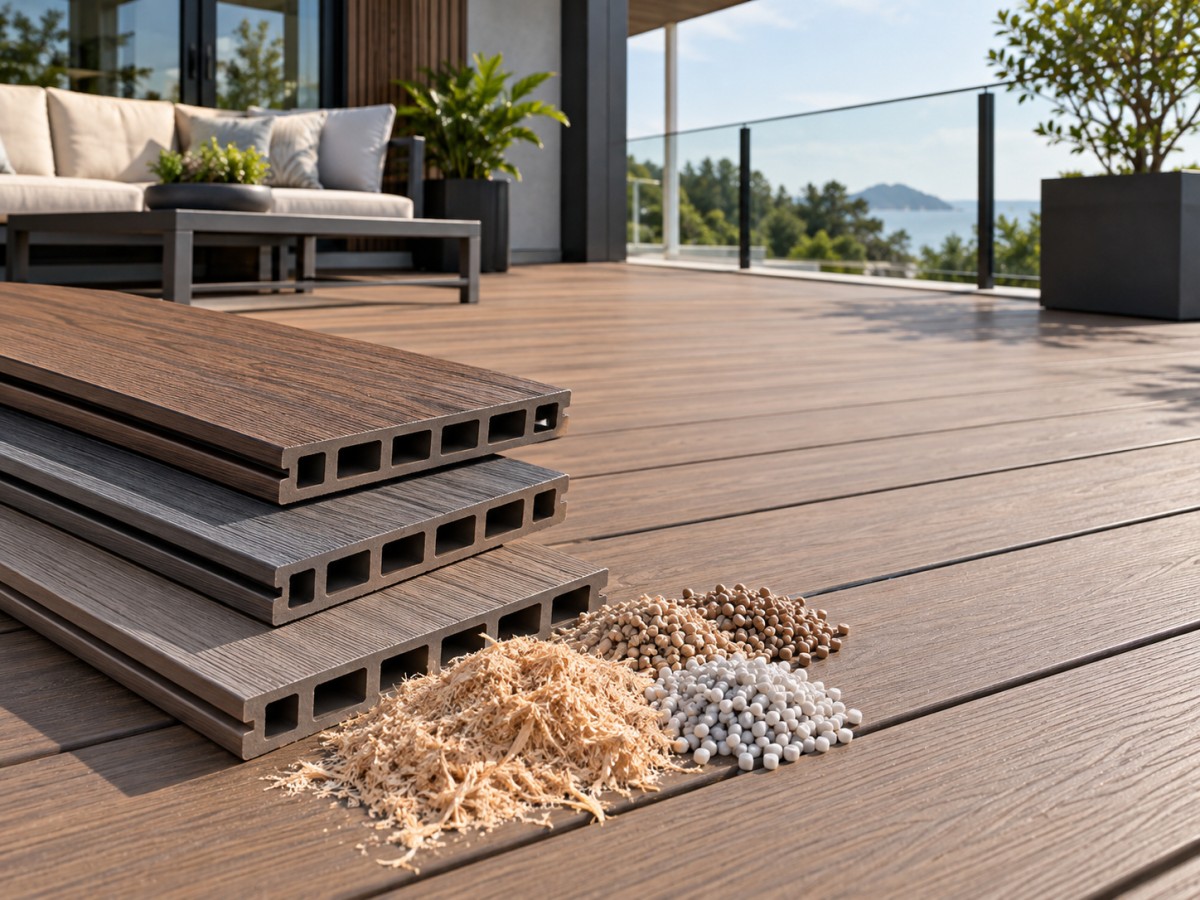
What Is WPC Composite Decking?
WPC composite decking is a manufactured outdoor decking material generally made using a combination of wood-derived content and thermoplastic polymers. Additional components can be incorporated depending on the product formulation.
The manufacturing process allows boards to be produced with relatively consistent dimensions, colours and surface patterns.
WPC is not simply timber with plastic added to its surface. It is a separate composite material with its own behaviour. Thermal movement, board profile, joist spacing and fastening requirements should therefore follow the specifications of the particular WPC system.
Material Composition Is the First Major Difference
The most fundamental difference between timber and WPC is their composition. Timber is solid natural wood, while WPC is a manufactured composite. This difference affects almost every other comparison.
Natural Timber Composition: Timber retains the cellular structure created during the growth of the tree. Species determine many of its natural characteristics. Chengal, Merbau, Balau, Belian and teak, for example, do not have identical density, appearance or natural durability. Board quality can also vary within the same species.
WPC Composition: WPC combines wood-derived material with polymer and other formulation components. The exact proportions and manufacturing methods vary between products. This means two WPC boards that look similar may have different physical characteristics. Product specifications are therefore important when comparing composite decking.
APPEARANCE AND SURFACE FEEL
Appearance is one of the clearest differences in timber vs WPC. Natural timber provides genuine grain and variation, while composite decking provides a manufactured interpretation of a timber-style or textured outdoor surface.
Neither approach is automatically preferable. The decision depends on the design objective.
Natural Timber Appearance
Every natural timber board is different. Colour, grain and other visual characteristics can vary even within the same species.
This creates an organic surface in which individual boards remain visually distinguishable.
Natural timber also changes with age and exposure. Its colour may gradually lighten, darken or become grey as the surface weathers.
Composite Decking Appearance
WPC boards are manufactured to provide greater visual consistency. Colours and textures can be selected during production, allowing the deck to have a more uniform overall appearance.
Some WPC products are designed to reproduce wood-inspired textures. However, the pattern remains manufactured rather than naturally occurring.
Which Looks More Like Real Wood?
Natural timber is real wood, so its grain and variation are inherent to the material. WPC can provide a wood-inspired appearance but does not reproduce the exact natural variation of solid timber.
Property owners who specifically want authentic timber character may therefore prefer natural wood. Those who prefer greater consistency between boards may find WPC more aligned with their design expectations.
How Timber Changes Outdoors
Natural timber changes visibly as it is exposed to sunlight, rain and humidity. This weathering should be expected when selecting timber for an outdoor deck. Weathering does not automatically mean deterioration.
UV radiation alters the exposed surface and can gradually change its colour. Some owners maintain a particular appearance through compatible surface treatments, while others allow the wood to develop a naturally weathered finish.
The preferred approach should be considered before choosing timber because it influences future maintenance expectations.
How Composite Decking Changes Outdoors
Composite decking can also change under long-term outdoor exposure, although it does not weather in exactly the same way as natural wood. The extent and type of change depend on the specific WPC product.
UV exposure, heat, dirt and environmental conditions can influence the surface over time. Manufacturers may use different formulations or surface technologies to manage exterior exposure.
Product-specific information is therefore more useful than assuming all composite boards will maintain exactly the same appearance indefinitely.
WEATHER AND MOISTURE RESISTANCE
Both timber and WPC can be used in outdoor environments, but they manage moisture differently. Neither material eliminates the need for proper drainage.
Malaysia's rainfall makes this particularly important.
Timber and Moisture
Natural timber absorbs and releases moisture. As moisture content changes, the boards can expand and contract.
Appropriate spacing allows for this expected movement while also helping water drain through the surface.
Naturally durable hardwood can be suitable for repeated exterior exposure, but persistent trapped moisture should still be avoided.
WPC and Moisture
WPC does not absorb and release moisture in the same way as solid timber. Its composite construction gives it different moisture behaviour.
However, this does not mean water can simply remain around a WPC deck without consideration. Standing water, blocked drainage and accumulated organic debris can still create maintenance and environmental problems around the system.
How Malaysia's Rainfall Affects Both Materials
Malaysia's frequent rainfall means decking should be designed around effective water management regardless of whether timber or WPC is selected. Rainwater normally passes between the boards.
The underlying surface should then direct water towards appropriate drains or other suitable outlets. The substructure should not unnecessarily obstruct this route.
Drain access also needs to remain practical where routine clearing is required. Selecting a moisture-resistant board does not correct a poorly drained site.
Humidity and Drying Conditions
High humidity can slow the drying of outdoor surfaces. The effect is especially noticeable in shaded gardens, enclosed courtyards and other locations with restricted airflow.
Natural timber is directly influenced by surrounding moisture conditions. WPC behaves differently but can still remain wet at the surface or around the supporting structure when airflow is poor.
Ventilation should therefore form part of both decking systems. The amount required depends on installation height, perimeter details and the surrounding environment.
Timber in Direct Sunlight
Timber surface temperature varies according to species, colour and environmental conditions. Direct UV exposure also contributes to natural colour change.
A timber deck under a roof can therefore behave differently from the same material installed around an exposed swimming pool.
WPC in Direct Sunlight
WPC can also become warm under direct sun. Its thermal behaviour varies according to product composition and colour.
Dark surfaces generally warrant particular consideration in areas where barefoot use is expected. Product samples should ideally be considered in relation to the actual outdoor exposure rather than only viewed indoors.
MAINTENANCE REQUIREMENTS
Maintenance is one of the most important practical differences in composite vs wood decking. Both materials require cleaning, but timber can involve additional appearance-focused surface care.
The appropriate choice depends partly on what type of maintenance the owner is comfortable carrying out.
Timber Deck Maintenance
Timber decking needs routine debris removal, cleaning and inspection. Board gaps should remain clear, and drainage should continue functioning.
Where owners want to preserve a particular timber colour or finish, compatible surface treatments may be used periodically. Timber can also be allowed to weather naturally, reducing the emphasis on maintaining its original colour.
WPC Deck Maintenance
WPC decking requires routine cleaning to remove dirt, leaves, spills and organic deposits. Mould or algae can still develop on environmental material accumulated on the surface, especially in damp and shaded conditions.
WPC generally does not require timber-style oiling or staining. This reduces one category of maintenance but does not make the deck maintenance-free.
Mould and Algae on Timber and WPC
Mould and algae are influenced strongly by environmental conditions rather than material name alone. Moisture, shade and organic debris can support growth on outdoor surfaces. Both timber and WPC decks should therefore be kept reasonably clean.
A recurring problem may indicate that the area remains damp for extended periods. Blocked board gaps, restricted airflow, dense vegetation or poor drainage should be investigated. Simply changing surface material may not correct a moisture problem created by the site.
DURABILITY AND LIFESPAN
Durability depends on material quality, exposure, installation and maintenance. It is not reliable to assign one universal lifespan to either timber or WPC.
A well-installed deck using suitable materials can perform very differently from a poorly installed deck made from the same board type.
Timber Durability
Timber durability varies significantly by species. Suitable tropical hardwoods can have natural durability characteristics relevant to exterior use.
Heartwood content, board quality and actual environmental exposure also influence performance. Installation and moisture management remain essential.
WPC Durability
WPC durability depends on formulation, board construction and manufacturing quality. Solid, hollow, capped and uncapped products can have different characteristics.
Manufacturer requirements for joist spacing, board gaps and fastening should be followed. The broad term "composite decking" alone does not provide enough information to predict long-term performance.
Chengal
Chengal is a Malaysian hardwood historically used for structural and exterior applications. Its natural durability and density are among the characteristics that make it relevant to outdoor decking. Appropriate sourcing, board quality and installation remain important.
Merbau
Merbau provides warm brown to reddish-brown colouring and distinctive natural grain. It is a dense hardwood used for flooring and exterior timber applications. Its natural extractives can sometimes create coloured runoff during early wetting, which should be considered near light-coloured surfaces.
Balau
Balau is associated with a group of dense tropical Shorea timbers. Actual characteristics depend on the material supplied. Buyers should therefore verify timber quality rather than assuming every product carrying the Balau name is identical.
Solid WPC
Solid-profile WPC boards have a largely solid internal construction. Their weight, support requirements and fastening method depend on the specific product.
Hollow WPC
Hollow boards contain internal cavities. Their installation and edge finishing should follow the product system. Hollow construction is not automatically better or worse than solid construction; suitability depends on design and application.
Capped WPC
Capped WPC uses an additional surface layer around the composite core. This can influence appearance and surface characteristics. The quality and extent of the cap vary between products.
INSTALLATION CONSIDERATIONS
Timber and WPC both require suitable substructures, but their installation requirements are not identical. Material-specific rules should be followed.
A decking installer should understand how the selected boards move and how they are intended to be fixed.
Timber Installation
Timber boards require appropriate joist support, board spacing and fastening. Dense hardwood may require pre-drilling. The spacing between boards needs to accommodate moisture-related movement while maintaining drainage.
WPC Installation
WPC products commonly have manufacturer-defined requirements for joist spacing and expansion gaps. Thermal movement needs particular attention. Installation guidance for one WPC system should not automatically be applied to another product.
Substructure Requirements
The substructure determines the support, level and stability of the deck. It should be designed for the selected surface material and site conditions. Timber and WPC boards may require different support intervals.
The underlying surface also matters. A concrete balcony, landscaped garden and commercial terrace create different structural and drainage conditions. Choosing the surface board before assessing the available substructure can lead to avoidable installation constraints.
Board Spacing and Material Movement
Correct spacing is essential for both timber and WPC, although the reasons for movement differ. Timber responds primarily to moisture changes, while WPC is particularly affected by temperature-related expansion and contraction.
Spacing should therefore follow the characteristics of the actual material. A single generic gap should not be applied to every timber species and composite board. Board gaps also contribute to surface drainage.
Fastening Systems
Both timber and WPC can use different fastening approaches depending on the product and board profile. Visible and concealed systems are available.
Timber Fastening: Face-fixed timber commonly uses suitable outdoor screws installed through the board surface. Concealed timber systems may use specialised grooves or fixing components. Dense hardwood can require careful pre-drilling and fastener selection.
WPC Fastening: Many WPC systems use clips positioned between boards. The clips can establish board spacing while connecting the boards to the substructure. The actual fixing system should be compatible with the specific WPC profile.
Repair and Replacement Considerations
Both timber and WPC decks can sometimes be repaired locally when individual boards are damaged. The practicality depends on the fastening system, availability of replacement boards and condition of the substructure.
Timber has the additional characteristic that many surfaces can be worked or refinished. WPC generally cannot be sanded and refinished in the same manner as solid wood. Replacement boards can also create colour differences in either system because existing material may have changed after years of outdoor exposure. Future access and board replacement should therefore be considered during installation.
LONG-TERM OWNERSHIP CONSIDERATIONS
Long-term ownership should consider maintenance requirements, expected weathering, repairability and product availability rather than focusing only on the initial deck installation.
Timber and WPC create different ownership experiences.
| Consideration | Timber Decking | WPC Decking |
|---|---|---|
| Routine cleaning | Required | Required |
| Inspection | Required | Required |
| Natural weathering | Expected | Not timber-style weathering |
| Appearance treatment | Optional depending on desired finish | Generally no timber-style refinishing |
| Local board replacement | Often possible | Product/system dependent |
| Surface refinishing | Possible for many timber decks | Generally limited |
| Replacement matching | Natural variation and weathering affect match | Product availability and fading affect match |
| Drainage maintenance | Required | Required |
The appropriate material is therefore partly determined by which maintenance and ageing characteristics the owner considers acceptable.
WHERE EACH MATERIAL WORKS BEST
Where Timber Decking May Work Best
Timber decking may suit spaces where genuine natural wood is an important part of the design. It can be considered for balconies, terraces, gardens, pool areas and commercial outdoor spaces when the selected species and system suit the exposure.
Timber may be particularly relevant where natural variation is welcomed. Garden and landscape projects can benefit visually from the relationship between real wood and surrounding vegetation. Hospitality environments may also use timber where natural materials form part of the architectural concept.
Where WPC Decking May Work Best
WPC may suit spaces where owners prefer a manufactured, relatively consistent appearance and want to reduce timber-specific refinishing requirements. It can be considered for balconies, patios, gardens and suitable commercial environments.
WPC may also appeal where predictable board colour and texture are design priorities. However, product-specific heat, movement and installation requirements should still be evaluated. Choosing composite solely because it is described as low maintenance can overlook important differences between products.
Timber or WPC for Balconies?
Both timber and WPC can be considered for suitable balconies. The decision should account for drainage, available installation height, sunlight and building requirements.
Natural timber provides authentic wood character and will gradually weather. WPC offers greater manufactured consistency and generally does not require timber-style surface treatment. For either option, existing drains and thresholds should remain functional. High-rise balconies should also be assessed for wind-driven rain and solar exposure.
Timber or WPC for Gardens?
Both materials can be used in garden settings when the supporting structure and moisture conditions are properly managed. The design preference often becomes a significant differentiator.
Timber naturally complements planting and landscape materials. WPC provides a more consistent manufactured alternative. Garden decks can collect leaves, soil and organic debris regardless of the surface board. Cleaning and airflow should therefore be considered for both.
Timber or WPC for Poolside Areas?
Poolside decking should be evaluated for frequent wetting, drainage, surface condition, sunlight and barefoot use. Neither timber nor WPC should be selected for pool areas solely on appearance.
Suitable timber can provide a natural poolside surface. Appropriate WPC can provide a manufactured alternative. Specific board characteristics matter more than the broad material category. Surface temperature should also be considered in areas exposed to prolonged direct sunlight.
Timber or WPC for Commercial Spaces?
Commercial decking should match expected pedestrian traffic, furniture movement, cleaning frequency and operational requirements. Both timber and WPC can be considered where the specific system is suitable.
Timber can support natural design concepts in restaurants, hotels and resorts. WPC can provide consistency across larger areas. Maintenance planning remains important for both because commercial decks may receive more frequent use than residential installations.
HOW TO CHOOSE BETWEEN TIMBER AND WPC
Choosing Based on Appearance
Appearance should be evaluated according to how the deck is expected to look over time rather than only when it is newly installed. Timber and WPC age differently.
Choose timber when genuine grain, natural variation and the possibility of weathering are compatible with the design. Consider WPC when greater initial uniformity and manufactured surface options are preferred. Neither material should be expected to remain completely unchanged outdoors.
Choosing Based on Maintenance Preference
Maintenance preference can help distinguish between timber and WPC when both are technically suitable for the site.
Timber may require more appearance-related intervention if the owner wants to maintain a particular finish. WPC removes most timber-specific refinishing requirements but still needs cleaning. A homeowner comfortable with natural timber weathering may find the practical maintenance difference smaller than someone who wants timber to retain its original colour.
Choosing Based on the Outdoor Environment
Environmental conditions should carry more weight than marketing descriptions when selecting decking. Rainfall, shade, heat and drainage differ between sites. An open rooftop deck has different requirements from a sheltered ground-floor patio. A poolside deck has different exposure from a condominium balcony.
The most suitable material is the one whose characteristics and installation system match these conditions while meeting the owner's appearance and maintenance expectations.
Assuming Timber Is One Material
Chengal, Merbau, Balau and other timbers have different characteristics. Board quality also varies. A meaningful comparison should identify the actual timber.
Assuming All WPC Is Identical
Composite formulation and board construction vary. The performance of one WPC product should not automatically be attributed to every other product.
Comparing Appearance Only
A board sample does not show drainage, support or long-term material behaviour. The complete decking system should be considered.
Ignoring the Substructure
The visible surface receives most of the attention, but the substructure determines support and influences moisture conditions. Both timber and WPC need appropriate supporting construction.
Assuming Low Maintenance Means No Maintenance
Every outdoor deck requires cleaning and inspection. WPC generally reduces timber-specific refinishing, but it still needs routine care.
| Factor | Natural Timber | WPC Composite |
|---|---|---|
| Core material | Solid wood | Wood-derived material and polymer |
| Grain | Natural | Manufactured |
| Colour variation | Naturally variable | Generally more uniform |
| Moisture response | Absorbs and releases moisture | Composite-specific |
| Heat response | Material and colour dependent | Product and colour dependent |
| UV response | Natural weathering | Product-specific |
| Refinishing | Possible for many systems | Generally not timber-style refinishing |
| Cleaning | Required | Required |
| Drainage | Essential | Essential |
| Ventilation | Important | Important |
| Installation | Species and board dependent | Manufacturer/system dependent |
How to Choose Between Timber and WPC
Choosing between timber and WPC is easier when the decision is broken into practical requirements. The site should be assessed before appearance becomes the deciding factor.
FREQUENTLY ASKED QUESTIONS (FAQS)
Is timber decking better than composite decking?
Neither material is universally better. Timber provides genuine natural wood, while composite provides a manufactured surface with different maintenance and movement characteristics. The appropriate choice depends on the site and owner priorities.
Which lasts longer, timber or WPC?
There is no universal lifespan comparison. Timber durability depends on species, quality, installation and maintenance, while WPC performance depends on formulation, board construction, installation and environmental exposure.
Which requires less maintenance?
WPC generally requires less timber-specific surface treatment. Both materials still need routine cleaning, drainage management and inspection.
Does timber handle Malaysia's rain?
Suitable outdoor timber can be used in Malaysia when drainage, ventilation and installation are appropriate. Persistent trapped moisture should be avoided.
Does composite decking absorb water?
WPC behaves differently from solid timber because of its composite construction. Moisture performance varies by product, and effective drainage remains necessary regardless of the board material.
Which decking looks more natural?
Natural timber provides genuine wood grain because it is solid wood. WPC can reproduce wood-inspired textures but remains a manufactured composite surface.
Does WPC decking get hotter than timber?
Surface temperature varies according to product composition, colour, sunlight and environmental conditions. Specific materials should be evaluated for highly exposed areas rather than assuming one category is always cooler.
Which is better for a poolside deck?
Both suitable timber and appropriate WPC products can be considered. Drainage, surface characteristics, heat exposure, barefoot use and maintenance should determine which specific material fits the pool environment.
Can timber and WPC boards be repaired?
Individual boards can often be replaced in both systems where the installation allows. Timber may also offer additional options for surface preparation or refinishing, while WPC repair depends more strongly on the product and availability of matching boards.
How do I decide between timber and WPC?
Assess the outdoor environment, drainage, desired appearance, maintenance preference and installation requirements. Then compare specific timber species and WPC products that meet those conditions.
CHOOSING BETWEEN NATURAL CHARACTER AND MANUFACTURED CONSISTENCY
Timber decking and WPC composite decking can both support outdoor living in Malaysia, but they achieve this using fundamentally different materials. Timber provides genuine wood grain, natural variation and a surface that visibly weathers with outdoor exposure. WPC provides a manufactured composite surface with greater consistency and reduced need for timber-specific refinishing.
Climate does not automatically determine the winner. Both materials need appropriate drainage, ventilation, spacing and supporting construction in Malaysia's rainy and humid environment.
The more useful comparison is therefore based on the actual space. Appearance, sunlight, moisture exposure, maintenance expectations, board characteristics and installation requirements should all be evaluated together.
Choosing between timber decking vs composite decking ultimately means deciding which material behaviour and ownership requirements fit the project rather than searching for one material that is universally superior.