
Timber decking is an outdoor flooring system made from natural wood boards installed over a supporting substructure. In Malaysia, common timber decking questions usually relate to suitable hardwoods, tropical weather, durability, maintenance, colour changes, drainage and how the boards are installed.
Natural timber behaves differently from manufactured outdoor flooring. Wood responds to moisture, sunlight and humidity, which means some movement and weathering should be expected throughout the life of a deck.
Board quality, substructure, spacing, fasteners, drainage, ventilation and maintenance also influence how the complete deck performs. These timber decking FAQs answer practical questions about selecting, installing and maintaining wood decking for Malaysian balconies, patios, and other outdoor spaces.
WHAT IS TIMBER DECKING?
Timber decking is a raised or supported outdoor surface constructed using natural wood boards. The boards are normally fixed to joists or another suitable substructure that provides support while allowing water to drain beneath the walking surface.
A complete timber decking system generally consists of several components:
- ✓ Natural timber decking boards
- ✓ Joists and supporting components
- ✓ Suitable outdoor fasteners
- ✓ Gaps between boards
- ✓ Drainage beneath the deck
- ✓ Edge and transition details
The visible timber is therefore only one part of the finished system. The quality of the supporting structure and moisture management can be just as important as the hardwood selected.
IS TIMBER DECKING THE SAME AS WOOD FLOORING?
Timber decking and indoor wood flooring are different systems designed for different environmental conditions. Timber decking is intended for exterior exposure and requires construction that accommodates rain, humidity, drainage and natural material movement.
Indoor wood flooring is generally installed within a more controlled environment. Outdoor decking boards also need gaps between them. These gaps help accommodate movement and allow surface water to pass through.
For this reason, an indoor flooring product should not automatically be assumed suitable for exterior decking simply because it is made from wood.
WHAT TYPES OF TIMBER ARE SUITABLE FOR OUTDOOR DECKING?
Suitable outdoor decking timbers are species with physical and natural durability characteristics appropriate for exterior exposure. In Malaysia, tropical hardwoods such as Chengal, Merbau, Balau, Belian and teak may be considered depending on the project and material availability.
Not every timber described as hardwood has identical characteristics.
Chengal
Chengal is a Malaysian tropical hardwood historically associated with structural and exterior uses. Its density and natural durability characteristics make it relevant to outdoor decking applications.
Material quality, sourcing and installation should still be considered when specifying Chengal.
Merbau
Merbau is a dense tropical hardwood commonly associated with flooring and outdoor timber applications. It generally has warm brown to reddish-brown colouring.
Its natural extractives can sometimes create coloured runoff when newly exposed to moisture, which should be considered where surrounding surfaces are light in colour.
Balau
Balau is a commercial name associated with several dense Shorea timbers. Because the name can cover more than one timber group, buyers should understand what material is actually being supplied.
Quality and board condition remain important for outdoor use.
Belian
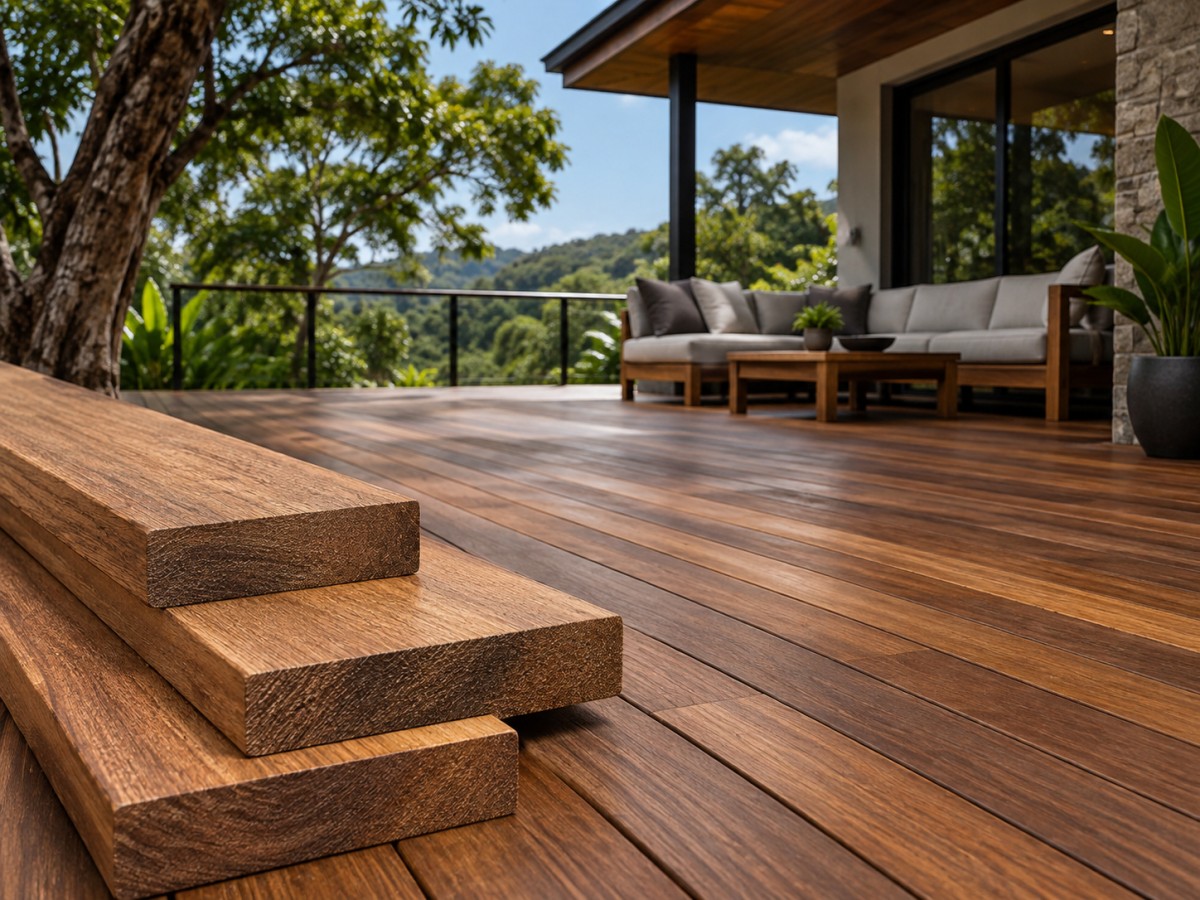
Belian is a very dense Southeast Asian hardwood historically used for demanding exterior applications. Its characteristics make it relevant where suitable material is available.
Sourcing, availability and appropriate machining should form part of the specification.
Teak
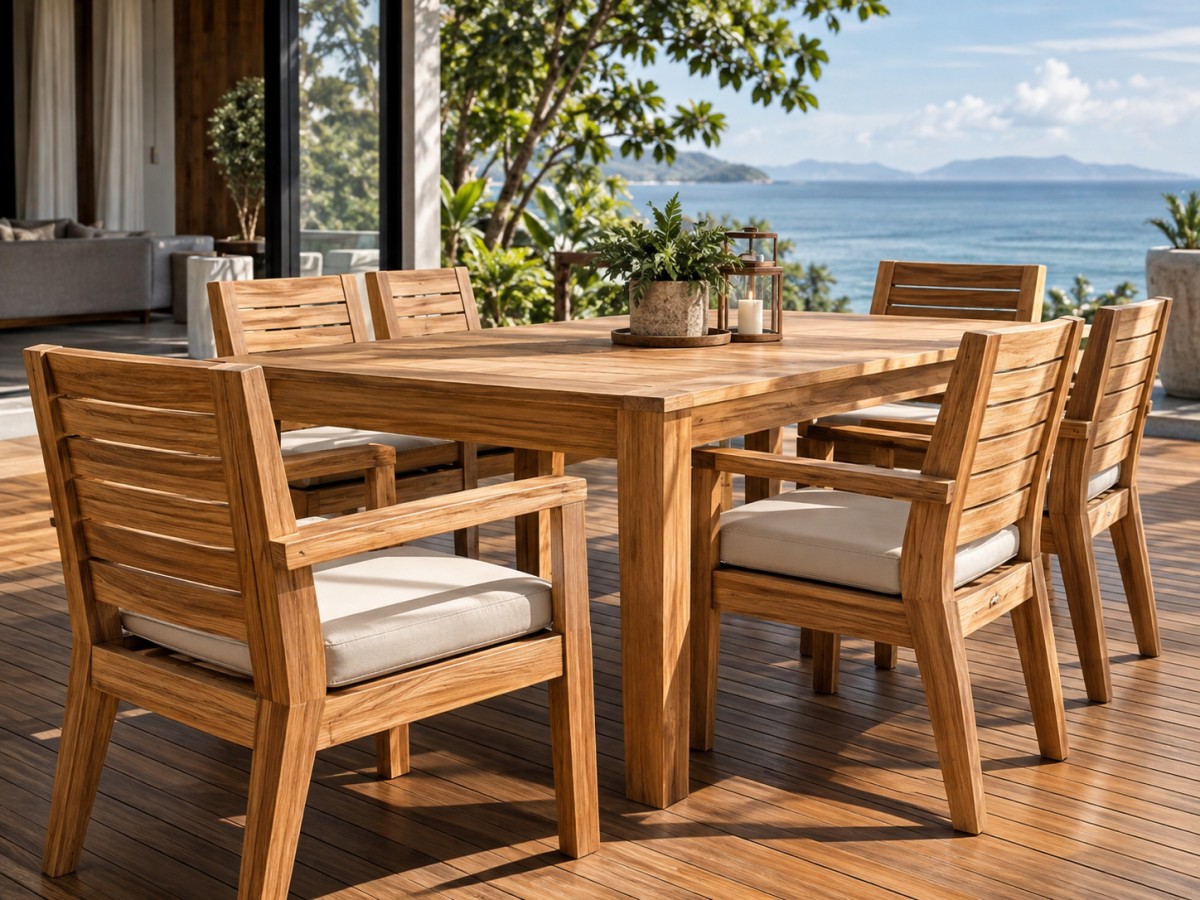
Teak is widely recognised for exterior furniture and other outdoor applications. Its characteristics vary according to origin, grade and growing conditions.
The actual timber should therefore be evaluated rather than relying only on the teak name.
IS ALL HARDWOOD SUITABLE FOR TIMBER DECKING?
No. Hardwood is a botanical classification and does not automatically mean that every hardwood species is suitable for outdoor decking. Different hardwoods have different density, durability, moisture behaviour and weathering characteristics.
The actual species should be identified. Material grade, heartwood content, board dimensions and quality should also be considered.
A suitable outdoor timber combined with an appropriate decking system provides a more reliable basis for selection than simply specifying "hardwood decking".
What Is the Difference Between Heartwood and Sapwood?
Heartwood is the inner portion of a tree, while sapwood is the younger outer wood involved in transporting water during growth. Their durability characteristics can differ within the same timber species.
For many species, the natural durability commonly associated with the timber relates primarily to the heartwood. This means two boards from the same species can have different characteristics depending on the material they contain.
Timber selection should therefore consider actual board quality as well as species.
HOW LONG DOES TIMBER DECKING LAST?
There is no single number of years that accurately describes how long every timber deck will last. Timber species, board quality, installation, rainfall exposure, drainage, ventilation and maintenance all influence service life.
A sheltered balcony and an exposed garden deck can experience very different environmental conditions. Similarly, a well-drained deck will experience different moisture conditions from one where water remains trapped beneath the boards.
Age should therefore be considered together with physical condition. A timber deck that remains stable, properly supported and well drained may continue to function even after substantial visual weathering.
What Affects Timber Deck Durability?
Timber deck durability depends on the material and the environment in which it is installed. Naturally durable hardwood is helpful, but construction and maintenance determine whether favourable conditions are maintained around the timber. Important factors include:
- ✓ Timber species and board quality.
- ✓ Correct substructure and joist spacing.
- ✓ Effective surface and under-deck drainage.
- ✓ Suitable board spacing and ventilation.
- ✓ Compatible outdoor fasteners.
- ✓ Routine cleaning and inspection.
No individual factor should be treated as a substitute for the others. A suitable hardwood still requires appropriate drainage, while good installation cannot completely compensate for unsuitable timber.
IS TIMBER DECKING SUITABLE FOR MALAYSIA'S CLIMATE?
Yes, suitable timber decking can be used in Malaysia when the species, installation and maintenance are appropriate for tropical outdoor conditions. The main environmental considerations are rainfall, high humidity, strong sunlight and repeated wet-dry cycles.
Outdoor timber is expected to become wet. The important issue is whether the deck allows water to drain and the material to dry effectively afterwards.
Malaysia's climate therefore makes moisture management a central part of timber deck design.
How Does Heavy Rain Affect Timber Decking?
Heavy rain wets the timber surface and increases moisture around the decking system. Timber naturally absorbs and releases some moisture, so dimensional movement can occur as environmental conditions change.
Rain itself does not automatically make timber unsuitable for outdoor use. Problems are more likely where water remains trapped. Clear gaps between boards, functional drainage beneath the deck and appropriate ventilation help reduce the amount of time timber remains unnecessarily wet.
Does Humidity Damage Timber Decking?
Humidity affects the moisture conditions around timber but does not automatically mean that decking will be damaged. High humidity can slow drying and contribute to moisture-related movement.
Malaysia's humid conditions make ventilation particularly relevant. A deck in an open area with good airflow may dry differently from one inside a shaded enclosed courtyard. Surrounding vegetation can also affect local humidity and drying.
Does Sunlight Affect Timber Decking?
Yes. Sunlight and UV exposure gradually change the surface colour of natural timber. Fully exposed boards generally weather faster than boards protected by roofs, furniture or shade.
This is primarily a surface weathering process. Timber may lighten, darken or eventually develop a grey appearance depending on species and exposure. UV-related colour change should not automatically be interpreted as structural deterioration.
DOES TIMBER DECKING CHANGE COLOUR OVER TIME?
Yes. Natural timber changes colour as it is exposed to sunlight, moisture and the outdoor environment. This weathering is an expected characteristic of real wood.
Different parts of the same deck can change at different rates. A section receiving direct afternoon sunlight may weather faster than an area beneath a covered terrace. Furniture and planters can also create differences by shielding sections of the boards from UV exposure.
Why Does Timber Decking Turn Grey?
Timber commonly turns grey because UV exposure and weathering alter the outer surface of the wood. The process is part of natural outdoor ageing. Grey timber is not automatically damaged timber. The physical condition of the boards should be assessed separately from colour.
Owners who prefer the original or a treated appearance may use an appropriate maintenance programme, while others may choose to allow the timber to weather naturally.
Can Grey Timber Decking Be Restored?
Weathered timber can often be cleaned and prepared for refinishing when the boards remain in suitable physical condition. The appropriate process depends on the species, existing finish and condition of the surface.
Restoration should begin with an assessment rather than simply applying another coating. Dirt, biological growth and deteriorated finishes may need to be addressed first. Refinishing changes appearance but does not correct structural, drainage or substructure problems.
HOW MUCH MAINTENANCE DOES TIMBER DECKING NEED?
Timber decking requires routine cleaning and periodic inspection. Additional surface treatment depends on the timber, environmental exposure and the appearance the owner wants to maintain.
Maintenance requirements are therefore not identical for every deck. A garden deck beneath trees may need more frequent debris removal than an exposed high-rise balcony. Owners who want to maintain a particular timber colour may also choose more frequent appearance-focused care than those allowing natural weathering.
How Often Should Timber Decking Be Cleaned?
Timber decking should be cleaned according to how quickly dirt, leaves and organic material accumulate rather than following one universal schedule. Environmental conditions differ substantially between outdoor spaces.
A deck beneath trees may collect leaves frequently. A poolside deck may need attention because of regular water exposure, while a restaurant terrace may require more frequent cleaning due to everyday use. Visual inspection provides a practical guide.
What Is the Best Way to Clean Timber Decking?
Timber decking should generally be cleaned using methods appropriate for the timber and existing surface finish. Routine cleaning starts with removing loose debris before washing the surface as required.
Aggressive cleaning should be approached carefully. Excessively abrasive tools or inappropriate high-pressure cleaning can affect the timber surface. Strong chemicals should not be applied without confirming compatibility with the wood and any existing treatment.
How Do You Prevent Mould and Algae on Timber Decking?
Mould and algae are best managed by reducing persistent moisture and organic build-up around the deck. Cleaning alone may provide only temporary improvement if the underlying conditions remain unchanged. Several practical measures help reduce favourable conditions for growth:
- ✓ Keep board gaps clear of debris.
- ✓ Maintain functional drainage.
- ✓ Remove leaves and soil regularly.
- ✓ Preserve airflow where possible.
- ✓ Manage dense vegetation around the deck.
- ✓ Address areas where water repeatedly collects.
Shaded areas deserve particular attention because they may dry more slowly after rainfall.
Why Does Mould Grow on Outdoor Timber?
Mould can grow where moisture, organic material and suitable environmental conditions are present. Timber decks can collect dust, leaves and other material that supports surface growth.
The timber itself is only one part of the environment. Persistent shade, blocked drainage or restricted airflow can make a particular section of decking more susceptible. Recurring mould should therefore prompt inspection of the surrounding conditions rather than repeated cleaning alone.
Is Timber Decking Slippery When Wet?
Any outdoor surface can become more slippery when wet, particularly if dirt, algae or other surface contamination is present. Timber decking should not be assumed to have one fixed slip characteristic in every condition.
Surface texture, board condition and maintenance all matter. A clean timber deck may behave differently from the same deck covered with algae. Poolside and other frequently wet areas should receive particular attention because users may also be barefoot.
Can Timber Decking Be Used Around a Swimming Pool?
Suitable timber can be considered for poolside decking when the material, surface, drainage and construction are appropriate for frequent wet conditions. Pool areas require additional attention to surface condition and barefoot use.
Water should be able to drain effectively from the deck. The material may also experience strong direct sunlight and repeated wetting. The specific timber should therefore be evaluated for the intended pool environment rather than selecting it based only on appearance.
HOW IS TIMBER DECKING INSTALLED?
Timber decking is generally installed by fixing boards over a suitable supporting substructure. The complete installation needs to provide structural support, board spacing, drainage and accommodation for natural timber movement.
The exact process varies according to the timber, board dimensions, fastening system and site.
What Is a Timber Decking Substructure?
The substructure is the supporting framework beneath the visible timber boards. It commonly includes joists and other components required to transfer loads to the underlying surface or structure.
Substructure quality is important because it affects board stability and drainage. Joist spacing needs to suit the selected timber and board dimensions. The supporting components should also be appropriate for outdoor conditions.
Why Are There Gaps Between Timber Decking Boards?
Gaps between timber boards allow rainwater to pass through the surface and provide room for normal material movement. They are a functional part of outdoor decking rather than a construction defect.
Natural timber expands and contracts as moisture conditions change. The required gap therefore depends on factors such as timber species, board condition and environmental exposure.
How Does Water Drain Through Timber Decking?
Water normally passes through the gaps between decking boards and reaches the surface beneath the deck. The underlying area should then direct that water towards appropriate drainage.
Board gaps alone are not enough. If water passes through the boards but becomes trapped beneath them, the system can remain unnecessarily damp. Existing drains and surface falls should therefore be assessed before the deck is installed.
Why Does Ventilation Matter Under a Timber Deck?
Ventilation helps moisture evaporate from the underside of the boards and supporting structure. This supports drying after rain and cleaning.
Airflow is particularly relevant in humid Malaysian conditions. Low-clearance decks and enclosed edges can restrict ventilation. The required solution depends on the construction, but perimeter details should not unnecessarily trap moisture where airflow is needed.
What Fasteners Are Used for Timber Decking?
Timber decking can be installed using visible face-fixed screws or compatible concealed fastening systems. The appropriate method depends on the timber, board profile and decking system.
Fasteners should be suitable for outdoor exposure. Dense hardwoods may require pre-drilling before screws are installed. Environmental conditions also matter because poolside, coastal or other demanding locations can create additional requirements for fastener selection.
What Is Concealed Timber Decking?
Concealed timber decking uses a fastening system designed to reduce or eliminate visible screws on the main walking surface. The system may use grooves, clips or other fixing methods depending on the product.
Concealed fastening changes how the boards are secured. It does not remove the need for correct support, spacing, drainage or timber movement. The board and fastening system must be designed to work together.
CAN TIMBER DECKING EXPAND AND CONTRACT?
Yes. Timber changes dimension as it absorbs and releases moisture. This is a natural property of wood.
The amount of movement varies according to species, grain, board dimensions and moisture conditions. Correct spacing and fastening help accommodate expected movement. Problems can develop when boards are installed too tightly or when movement is unnecessarily restricted.
Why Do Timber Decking Boards Crack?
Outdoor timber can develop surface checking or cracks because of repeated moisture and drying cycles. The significance depends on the size, depth and location of the crack.
Minor surface checking does not necessarily mean a board has failed. More substantial splitting, particularly around fasteners or structural areas, should be inspected. Installation technique, material condition and environmental exposure can all influence cracking.
Can Timber Decking Warp?
Timber can change shape when moisture conditions differ across the board or when material movement is not adequately accommodated. Warping is therefore influenced by both natural wood behaviour and installation conditions.
Suitable board selection, support and fastening help manage movement. Persistent moisture on one side of a board can create less balanced conditions. A significantly distorted board should be assessed to determine whether the problem is isolated or related to the broader decking system.
Can Damaged Timber Decking Boards Be Replaced?
Yes. Individual timber boards can often be replaced where damage is localised and the supporting structure remains suitable. Replacement is one advantage of a board-based decking system.
The new board may initially differ in colour because surrounding timber has already weathered. The cause of the original damage should also be identified before replacement. Replacing a board without correcting persistent drainage or support problems may allow the issue to recur.
WHERE CAN TIMBER DECKING BE USED?
Timber decking can be used in suitable residential, landscape and commercial outdoor spaces. The specific timber and construction should be matched to each application's environmental and functional requirements.
Common applications include:
- ✓ Balconies and condominium outdoor areas
- ✓ Patios and residential terraces
- ✓ Garden seating areas and walkways
- ✓ Poolside spaces
- ✓ Restaurant and café terraces
- ✓ Hotel and resort outdoor areas
Each application creates different requirements for drainage, traffic, sunlight and maintenance.
Is Timber Decking Suitable for Balconies?
Timber decking can be suitable for balconies when installation height, drainage, thresholds and building conditions allow it. High-rise balconies can still receive substantial rain and sunlight.
Existing drainage should remain functional. Condominium management or building requirements may also apply. The decking should therefore be planned around the actual balcony rather than treated as a purely decorative floor covering.
Is Timber Decking Suitable for Gardens?
Timber decking can create seating, dining and circulation areas within landscaped gardens. Natural wood can also visually complement planting and other landscape elements.
Garden decks require particular attention to moisture and organic debris. Leaves can accumulate between boards, while dense vegetation may restrict airflow. The relationship between the deck, soil and surrounding planting should therefore be considered during planning.
Can Timber Decking Be Used for Commercial Spaces?
Yes. Suitable timber decking can be considered for restaurants, hotels, resorts and other commercial outdoor spaces. Commercial decks may experience heavier traffic, furniture movement and more frequent cleaning than residential decks.
Material and construction should reflect those conditions. Operational access is also important. A restaurant terrace, for example, needs sufficient circulation and practical cleaning access around furniture.
IS TIMBER DECKING BETTER THAN WPC?
Timber and WPC provide different characteristics, so neither material is universally better. Natural timber provides genuine wood grain and natural variation, while WPC provides a manufactured composite surface with more consistent appearance.
Maintenance also differs. Timber may be refinished when owners want to maintain a particular appearance. WPC generally does not require timber-style oiling or staining but still needs cleaning and inspection. The appropriate material depends on the site and owner priorities.
Is Timber Decking Better Than Outdoor Tiles?
Timber and outdoor tiles are different flooring systems with different material behaviour, installation and appearance. The more suitable choice depends on the project.
Timber creates a raised board-based surface and provides natural grain. Tiles generally form a hard continuous finish installed according to the relevant outdoor tiling system. Drainage, heat exposure, maintenance and existing site conditions should be compared before selecting either option.
Is Timber Decking Better Than Natural Stone?
Timber and natural stone provide different outdoor surfaces and should be selected according to functional and design requirements. Timber offers a natural wood surface with board joints, while stone provides a mineral-based hardscape finish.
Both materials are affected by outdoor conditions in different ways. Surface temperature, drainage, maintenance and the supporting construction should be evaluated for the actual location. A general material label does not establish which is more appropriate for every project.
SHOULD TIMBER DECKING BE COVERED?
Timber decking does not always need to be covered, provided the selected timber and construction are suitable for exterior exposure. Covered and uncovered decks simply experience different environmental conditions.
A roof can reduce direct rain and UV exposure. However, covered areas may sometimes receive less sunlight and dry more slowly. Wind-driven rain can also reach covered balconies and terraces. Drainage and ventilation therefore remain necessary.
Can Furniture Be Placed on Timber Decking?
Yes. Outdoor furniture can be placed on suitable timber decking when the deck is designed for the expected use. Furniture should be positioned so it does not unnecessarily obstruct drainage or create difficult-to-clean areas.
Furniture feet should also be kept in reasonable condition. Dragging damaged or abrasive furniture across the boards can affect the surface. Heavy fixed items should be considered during structural planning where necessary.
Can Planters Be Placed on a Timber Deck?
Planters can be incorporated into timber decking areas, but moisture and cleaning access should be considered. Water and soil should not remain trapped beneath containers for long periods.
Movable planters can simplify cleaning. Trays or other suitable arrangements may help manage water depending on the planting system. Large or heavy planters may also need to be considered when assessing the deck's supporting structure.
WHAT ARE THE SIGNS THAT TIMBER DECKING NEEDS ATTENTION?
Timber decking needs closer attention when changes affect stability, drainage or safe use. Colour change alone is not necessarily evidence of deterioration.
Signs worth investigating include:
- ✓ Loose or moving boards
- ✓ Raised or deteriorated fasteners
- ✓ Persistent standing water
- ✓ Significant cracking or splitting
- ✓ Recurring mould or algae
- ✓ Changes in deck level or support
These conditions should be assessed to determine whether cleaning, repair or more substantial attention is required.
How Do I Choose Timber Decking for My Property?
Choosing timber decking requires matching the timber species and complete decking system to the outdoor environment. Appearance should be considered together with moisture exposure, maintenance and installation requirements. A practical selection process includes:
What Should I Ask a Timber Decking Supplier?
A timber decking supplier should be able to explain what material is being offered and how it relates to the proposed application. Clear information helps buyers compare options more accurately. Useful questions include:
- ✓ What timber species are being supplied?
- ✓ What are the board dimensions?
- ✓ What substructure is proposed?
- ✓ How will drainage remain functional?
- ✓ What fastening method will be used?
- ✓ What maintenance should be expected?
The answers should relate to the actual project rather than relying only on broad descriptions such as "premium hardwood" or "outdoor grade".
What Is the Most Important Thing to Know About Timber Decking?
The most important point is that timber decking should be considered as a complete outdoor system rather than only a visible wood surface. Timber selection, installation, drainage, ventilation and maintenance work together.
Natural timber will also change outdoors. Some colour variation, weathering and material movement should be expected. Understanding these characteristics before installation makes it easier to distinguish normal ageing from conditions that genuinely require attention.
UNDERSTANDING TIMBER DECKING AS A COMPLETE OUTDOOR SYSTEM
Timber decking provides a natural outdoor surface for balconies, terraces, gardens, pool areas and suitable commercial spaces. Its performance depends on choosing appropriate timber and constructing the deck to manage the environmental conditions around it.
Malaysia's rainfall and humidity make drainage and ventilation especially important. Strong sunlight also means that natural colour changes should be expected as the wood weathers.
Routine cleaning and inspection support the deck throughout its use, while surface finishing can be managed according to the appearance the owner wants to maintain.
The answers to common wood decking questions therefore point to the same underlying principle: timber species alone does not determine the quality or longevity of a deck. Material quality, supporting construction, moisture management and maintenance need to work together.